|
Dick's Bluegrass
Odyssey Volume 7 |
|
| Related Links | |
| Chapters 1 - 4 Chapters 5 - 8 Chapters 9 - 12 Chapters 13 - 16 | |
|
The first five chapters of this series originally appeared in the Fresno Folklore Society Flyer. It was decided to discontinue publishing them and make them available only on line. It should be noted that information about most of these festivals has been included in my travel reports. But those pages were written for a general audience, while this series is aimed specifically at fans of folk music. --Dick Estel, September 2026 |
|
|
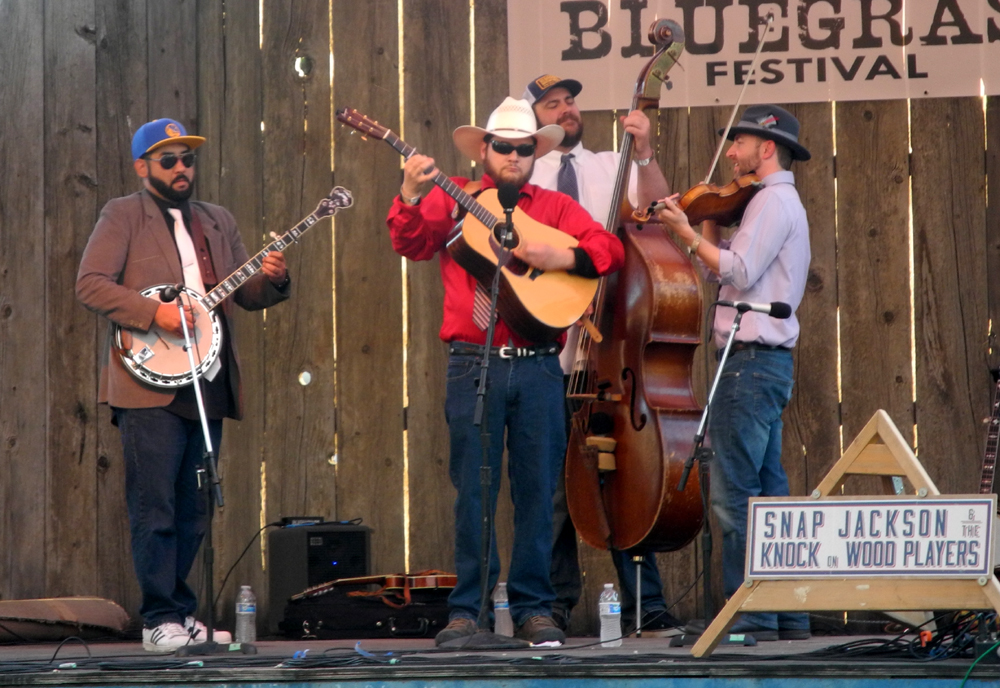
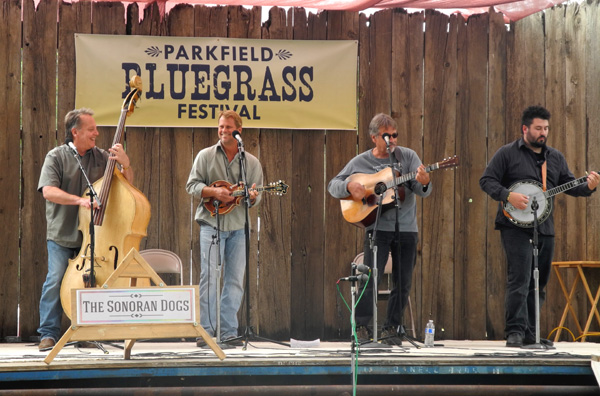
My Bluegrass Odyssey Chapter 26 Chapter 27 Chapter 28 Chapter 29 Chapter 30 by Dick Estel The year 2015 would be my last to attend more than one festival. After that and to the end of this seemingly endless Odyssey, I went only to the Parkfield Festival. After six or seven years the event had a loyal following on the central coast, where a group of fans banded together as the Bluegrass Music Society of the Central Coast (BMSCC). They put on a few concerts, but their main focus is the Parkfield Festival, and they've continued to produce the event ever since. As of 5:40 p.m. Thursday, May 7, the 2015 event was not what anyone wanted. Thunderstorms were forecast for the area, and it rained on and off during my drive from Fresno. About 4 p.m. a hard steady rain set in. The musicians performed in the cafe, and I walked over there early in the afternoon, but it was standing room only, and not much of that, so I returned to the motor home to read, eat and watch TV. No big deal - all that day’s groups would appear again during the following three days. The big rain stopped about 6 p.m., but there were showers off and on into the night. Friday morning it was cloudy but no rain was forecast. Even so, the morning show was held in the cafe, which was good for the people who got there in time to get a seat, but less so for the ones who had to stand, and the ones who couldn't even find standing room. I went early enough to be one of the lucky ones and saw all three of the groups on the morning program. The best of those was Steep Ravine, which was at Parkfield last year. They had an excellent lead singer, and were joined this year by the sensational mandolin player, Tristan Scroggins, who was at the festival the previous year with his father’s group, Jeff Scroggins & Colorado. Steep Ravine played a variety of styles, from straight bluegrass to Django Reinhardt. Also performing were the Brothers Barton, whom I've seen several times in the past. They did too many "progressive" instrumentals, but played bluegrass very well when they played it. Finishing the morning program was Amaya Rose & Gold Rush, with ages ranging from 13 to 17. These were kids who got their start in the "Kids on Stage" programs. Amaya was a good fiddler and decent singer at 16, and showed a lot of promise for the future. With no more rain in sight, the rest of the festival took place outdoors as scheduled. The musical performances ranged as usual from fair to excellent. Two groups stood out. Snap Jackson and the Knock on Wood Players were making their seventh consecutive appearance at Parkfield. Snap had an emergency appendectomy just over a week before the festival, and was under doctor's orders to take it easy He could perform but had to do it sitting down, a bit of a challenge for most bluegrass musicians, and could not play his large banjo, which weighs around twelve pounds. Despite the limitations, they sounded as good as ever, and brought for sale their latest CD, recorded live at last year's Parkfield event. The other excellent group was Bluegrass Etc., another group I've seen several times. In the past their bass player was Bill Bryson, who performs with many groups, but he's been replaced by Steve Spurgeon, a singer-songwriter who's created hits for a number of country artists. His best known work is "A Walk in the Irish Rain," which is now considered somewhat of a traditional Irish song. The other two members are Dennis Caplinger, an outstanding banjoist whose playing can be heard on The Simpsons and other TV shows, and John Moore, an amazing guitar player and singer. I name him the best vocalist at the festival. Another of my favorites was Amber Cross, who had performed with The Old Time Fiddle and Banjo Show at previous festivals. Her voice has a slight resemblance to Iris DeMent, and she’s an accomplished writer. She had once lived in Prather in the Fresno County foothills, and was familiar with the San Joaquin Gorge (once called Squaw Leap), which at the time was threatened by a proposed dam. She performed a song she had written about the value of the place as nature made it. We were also entertained by the Sonoran Dogs, a group that formed in Arizona in 2011.They toured around the Southwest, and overseas in Australia and New Zealand, and had developed a unique style, incorporating a mix of traditional, progressive, and original music. Several members have won awards for their musicianship, which was clearly on display during their Parkfield appearance. Next Generation was a young group, four of the five members 21 or younger, most of them sons of established bluegrass musicians. I witnessed the "birth" of this band when they performed as an informal group, playing songs between sets at Summergrass in 2010. As would be expected, they had improved and developed into a real band in the five years since. I managed to get in my daily walk every day, touring Parkfield and the nearby roads. On Sunday I did my full festival grounds tour – down the road that leads to the "boondocks" camping area (next to the rodeo grounds), then around the area that contains tent camping, showers, some motor home sites, and the old wooden water tower, with its fading Shell Oil sign. On this walk I met two young boys on bikes, one of whom went out of his way to ride through a puddle that I went out of my way to avoid. A bonus from the storm was cool weather until the middle of the day on Sunday, at which time I was ready to leave anyway. In an unusual wildlife sighting, I saw what I am pretty sure was an antelope on my way in, about half way between Highway 41 and Parkfield. I've seen deer and antelope before, but I'm still waiting to spot one of the wild pigs that frequent the hills. Although I enjoyed the festival for the most part, I found myself pondering whether the whole experience might have reached a natural end for me. When I first started going, I watched every group with undivided attention. More recently I found myself reading while listening, skipping some groups entirely, and in general, not being as invested in the proceedings as I was in the past. I've been rained on, rained out more than once, baked by the heat, and froze my a** off some cold evenings. In the words of the old song, I'm starting to ask if I've enjoyed as much of this as I can stand. I could not help thinking that I could read, watch TV, and listen to bluegrass in the comfort of my living room, and it would not cost upwards of $250 for tickets, electrical power and gas. I chose not to make a final decision, waiting to see what my gut reaction would be when the tickets went on sale the next year. The other festival of 2015 was a one-day event at Hobbs Grove. Growing from the long-running Kings River Bluegrass Festival, a three-day event that was last held in 2013, this was a low-key production, with eight groups, all from the central valley, mostly from the Fresno area. I had seen seven of them previously, so it was not a festival where I expected to be amazed by a group that was unknown to me. Fortunately, there was in fact that band that makes it all worthwhile - the Poor Valley Band, based in Merced. It was built around a father and daughter, plus two other musicians. The girl, who is a young adult, does most of the singing. She did not play an instrument, but her voice was amazing. I had seen them here in 2013, and hoped to see them again soon. Two for the Road was another group that surprised me. When I saw them on stage, just two people, one playing an electric keyboard, I expected the worst. While their music is certainly not bluegrass, it's very good – a mix of pop and country, done well and entertainingly. Fresno folk fans are well-acquainted with these folks. The Narrow Gauge Ramblers had risen from the ashes of Smiley Mountain, a group mostly from the foothills north of Fresno (North Fork, Oakhurst, etc.) They had a bass player who had a style that was different from the usual "BOOM-boom, BOOM-boom" approach, and the group overall was quite good. At the Kings River festival they had a substitute bass player who was very average, but they added a guest dobro artist, and I enjoyed their performance once again. Grassfire has been around for several years, appearing in the park and at this festival. Their usual banjo player, Tom Naiman, could not make it, but they had a substitute lined up. At the next to last minute, he was called away to a fire in Oakhurst, so Jack Kinney was pressed into service at the very last minute. He's a young man who we've seen develop into a highly skilled musician, expert on fiddle, mandolin and banjo, and capable of holding his own in any setting. There was only one food booth, which was enough for a single day. It was the Forestry Club from Reedley College, selling drinks, hot dogs, hamburgers and ice cream. Although I had brought food that would have got me through the day, I could not resist patronizing this group, since my younger daughter and her husband earned AS degrees in forestry at Reedley about 20 years ago. There was no break, with a new group every hour, ending at six p.m. as Red Dog Ash, a highly popular group from the Turlock area, sent us home with two encores. Not all the entertainment was from the music. When I arrived there were two dogs sleeping in the shade of the old barn, as relaxed as it's possible to be without being dead. I went out to my car for water and snacks several times during the day, and at noon the large dog appeared not to have moved a muscle since I arrived two and a half hours earlier. Later he was gone, but the small dog was making his way back to the shady spot, moving as slowly as possible. When I left for home about 6:15, the big dog was back in his same spot, looking as if he had not moved the entire day. I envied him. |
|
 |
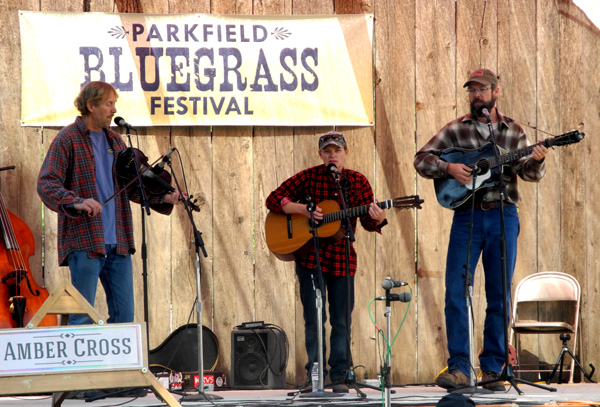 |
| Sonoran Dogs | Amber Cross |
|
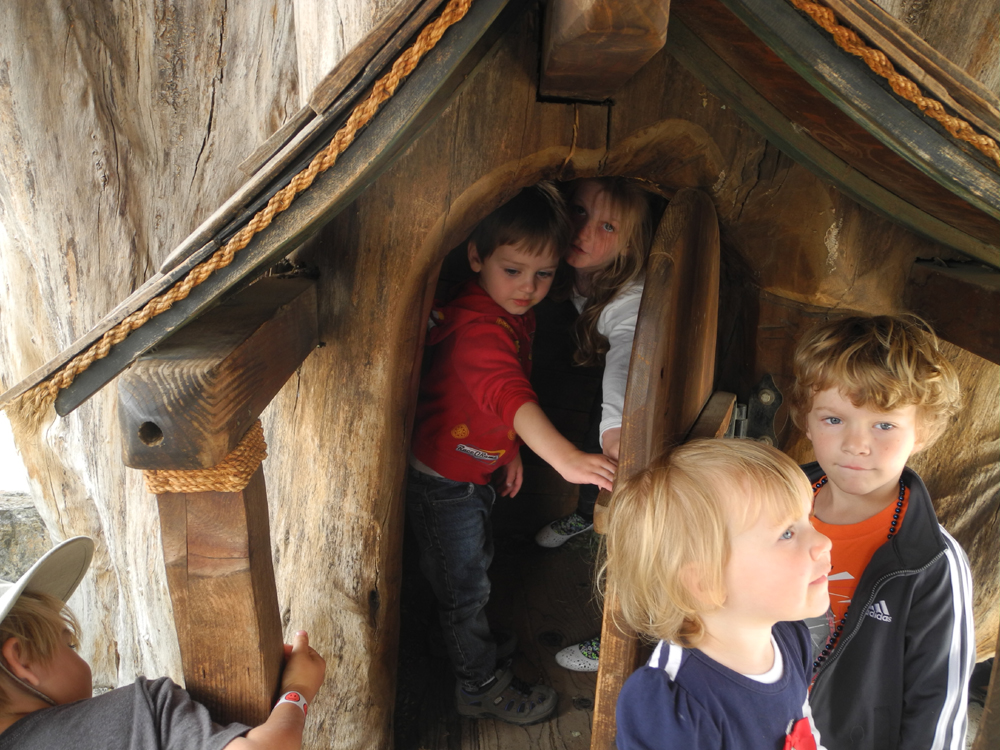
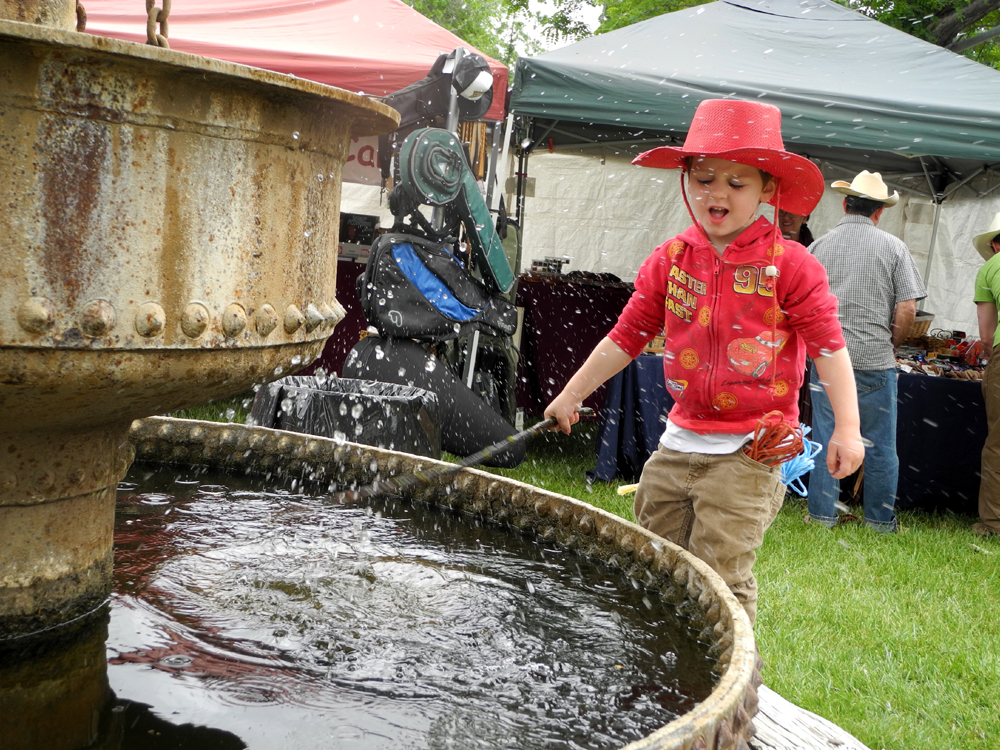
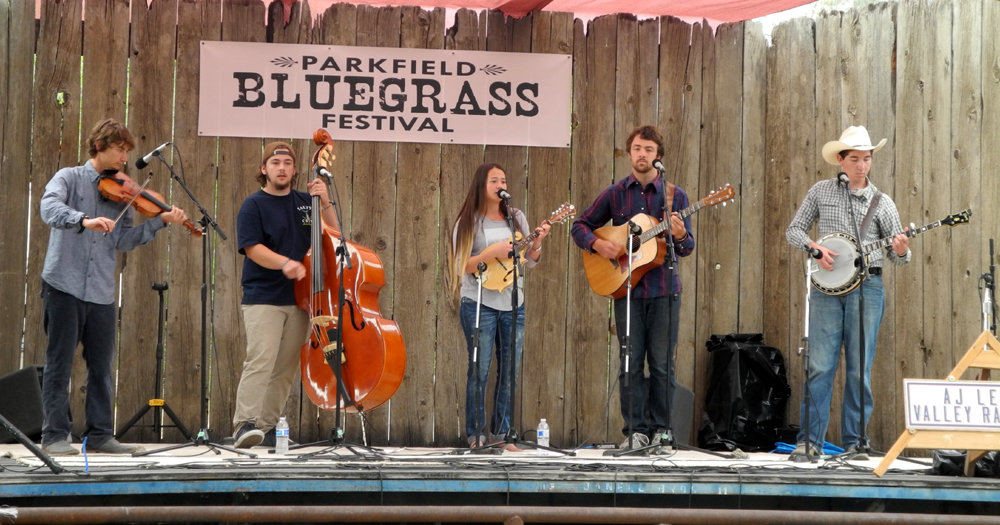
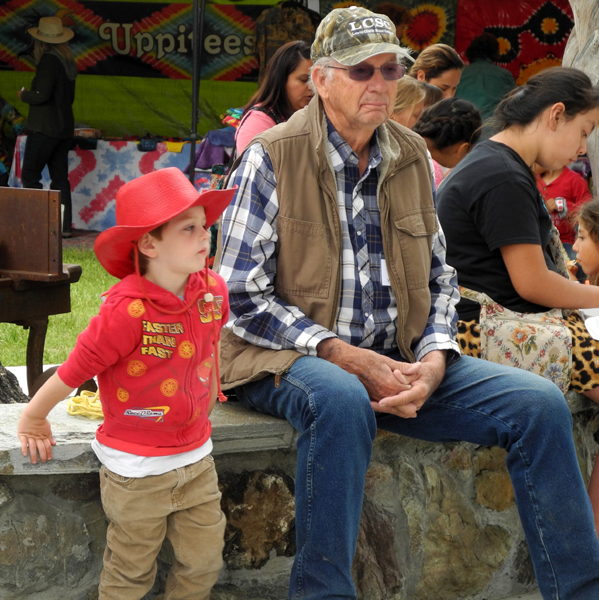
Chapter 27 Chapter 26 Chapter 28 Chapter 29 Chapter 30 After nearly 30 chapters and thousands of words, this series is drawing to a close with just four more festivals, one a year, all Parkfield. The 2016 event was one of the best. It was also one of the worst. Let me dispose of the "glass half empty" aspects of the festival, so I can concentrate on the positive aspects, which outweighed the negative. First, it rained. That's nothing new, it's happened before. When it rains, the show is moved inside the cafe. This is presented as an acceptable alternative, but it works only for the first 20 or 30 people who get into the cafe. All others are in the back of the room where they can't hear or see, and we are essentially standing in a noisy bar. The rain was a short thunderstorm, and happened right before the last act of Friday afternoon, which happened to be Snap Jackson, one of the main groups I go to see. Missing them was bad enough but since the rain stopped, the evening show could have gone on as planned. Except that the power went out. They quickly brought in a generator for the cafe and the entire Friday night show took place in that crowded, cramped space, so we didn't even try to go. You may have noticed my use of "we," and that's where the festival was the best. My daughter Teri attended for the first time in about a dozen years, and brought along my older great grandson Colton, age 3+. So having them there, with or without music, made for a good weekend. It is always fun seeing things through the eyes of a new generation. Bluegrass festivals in general, and Parkfield in particular, are very kid-friendly. In recent years a tree house was built on top of a huge cottonwood stump near the audience area. It has a solid set of stairs and a good safety railing around the porch. The stairs are closed off after the first day, but on Thursday Colton was able to go up and down and go inside the house, along with several other kids. The bottom part of the stump has a little room cut into it, open throughout the festival. To look at it you would think it only had room for one or two kids, but it was not unusual to see the door open and five kids come out. Colton and others took advantage of this place throughout their time at the festival. Dating back long before the launch of the bluegrass festivals are two large fountains, built of various scrap metal items. These have always attracted kids, and it is a rite of passage that a kid sees the fountain, dips his fingers in the water, and soon is reaching in to his elbows, while getting his clothes wet from neck to knees. Colton was no exception, reaching into the water, splashing it with a stick, and spotting the carp that lurk in the bottom of the larger fountain. There was also music, and the performers we were able to hear were mostly great; in fact, this was one of the best first-day line-ups in a long time. A particular standout was the opening act, the Sweetwater String Band, whose unique sound was enhanced by a cello, not a common instrument in bluegrass. Another great group was Steep Ravine, making their third appearance. Their lead singer has a very good, somewhat gentle voice, perhaps the best pure singer at the festival. Also outstanding the first day was Gold Heart, featuring the Gold Sisters and family from Virginia. Their sibling harmony was delicious. Thursday evening's lead-off artist was a girl I've seen perform since she was 11, originally with OMGG at the Brown Barn festival. AJ Lee is now 18 and leading her own group, and sounds better than ever. Her mother, with whom she's been singing since she was about 5, joined her on stage for a song, adding more of that fantastic family harmony to the proceedings. On Friday afternoon we saw the Honeysuckle Possums and A.J. Lee again. The Possums are a very talented all-female group. One member does Appalachian step dancing on a soundboard to add to the fun. The last group of the afternoon was Snap Jackson and the Knock on Wood Players. Ever since I first saw them at Brown Barn in 2009, I've been talking them up to anyone I know that might have the slightest interest. They have been at Parkfield every year since 2010, and I was looking forward to enjoying my daughter's first time seeing them. Mother Nature had other ideas. A.J. Lee was just finishing up when the threatening skies I'd been keeping an eye on all afternoon opened up with a thunderstorm and hard rain. We went to my motor home, and sat outside under the awning. Although the performance was moved into the café, we did not try to squeeze into that small space. Saturday morning was sunny, wet and powerless. I had not expected power to be restored very quickly, being in a rural area, to which repair crews would naturally give lower priority. In addition, the problem was spread over a wide area. However, generators had been set up in several areas, most importantly the main stage, and the show went on as scheduled. The performer of most interest to me in the morning was Amber Cross, whom I’ve written about earlier. The first group of the afternoon, the Evie Ladin Band, featured a performer I've seen in two different settings. I like her fine as a member of the Stairwell Sisters, a very good, all female group from San Francisco. On her own, her act features dancing, rhythmic vocalizing, and hambone (slapping various parts of the body in rhythm). I'm not bothered by the fact that it's not bluegrass - I just don't particularly enjoy it. The next two groups were outstanding. First was a "supergroup" of well-known individual musicians who are currently touring as a group. Dan Crary has long been recognized as one of the top flat pick guitar players in the country. Bill Evans has been a mainstay of California bluegrass for decades, and is equally recognized on the banjo. Steve Spurgin is a highly admired songwriter and singer, usually more in the pure folk realm than bluegrass, but adept vocally and on the bass in any setting. His most famous song is "A Walk in the Irish Rain." He also fattened his bank account with "Speak Softly (You're Talking to My Heart)," a major hit for country star Gene Watson. Jeff Scroggins & Colorado were at Parkfield in 2014 and made a huge impression, and they were even better this year. They play a very hard-driving brand of traditional sounding bluegrass with modern touches, powered by Jeff's unique approach on the banjo, and his son Tristan's incredible mandolin playing. Teri agreed that this was the best group she saw. Teri had Mother's Day plans the next day, so she left after this performance. After all his adventures, Colton had finally run down, and had fallen asleep in her lap. He had a hard time waking up and fussed as we walked over to her motor home, but made a good recovery on the way home. I helped them get things ready to go, and we said our goodbyes. The dinner break went by quickly, and I finally got to see Snap Jackson, who put on his usual crowd-pleasing performance. Next up was another appearance by Crary, Evans and Spurgin, who turned in another high-skill performance. They were followed by Jeff Scroggins & Colorado, and here is where I made an interesting observation. With the Crary group, the audience was quiet and respectful, and applauded enthusiastically. When the Scroggins crew started up, the audience came alive, cheering and whooping (not constantly of course). My impression was that the former group was like chamber music, playing with skill but little passion, while Colorado made a more direct emotional connection with the audience. The energy flowed both ways, as Colorado put on the best performance I've seen from them in their two Parkfield appearances. When they played the "last song," they were of course called out for an encore, and they delivered the wildest, hottest single song of the festival. This just got the audience on their feet calling for another encore, so the fiddle player said, "We're going to have to play a quiet love song to settle you guys down." They did this indeed, with the John Denver song "Darcy Farrow," a sad slow song with a Romeo and Juliet ending. Despite the somber tone, it was a fine finish to an hour of incredible music. |
|
 |
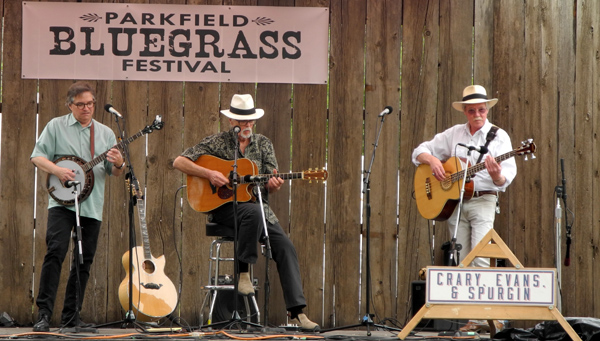 |
| Colton Upshaw and Rad Spurlock | Evans, Crary & Spurgeon |
|
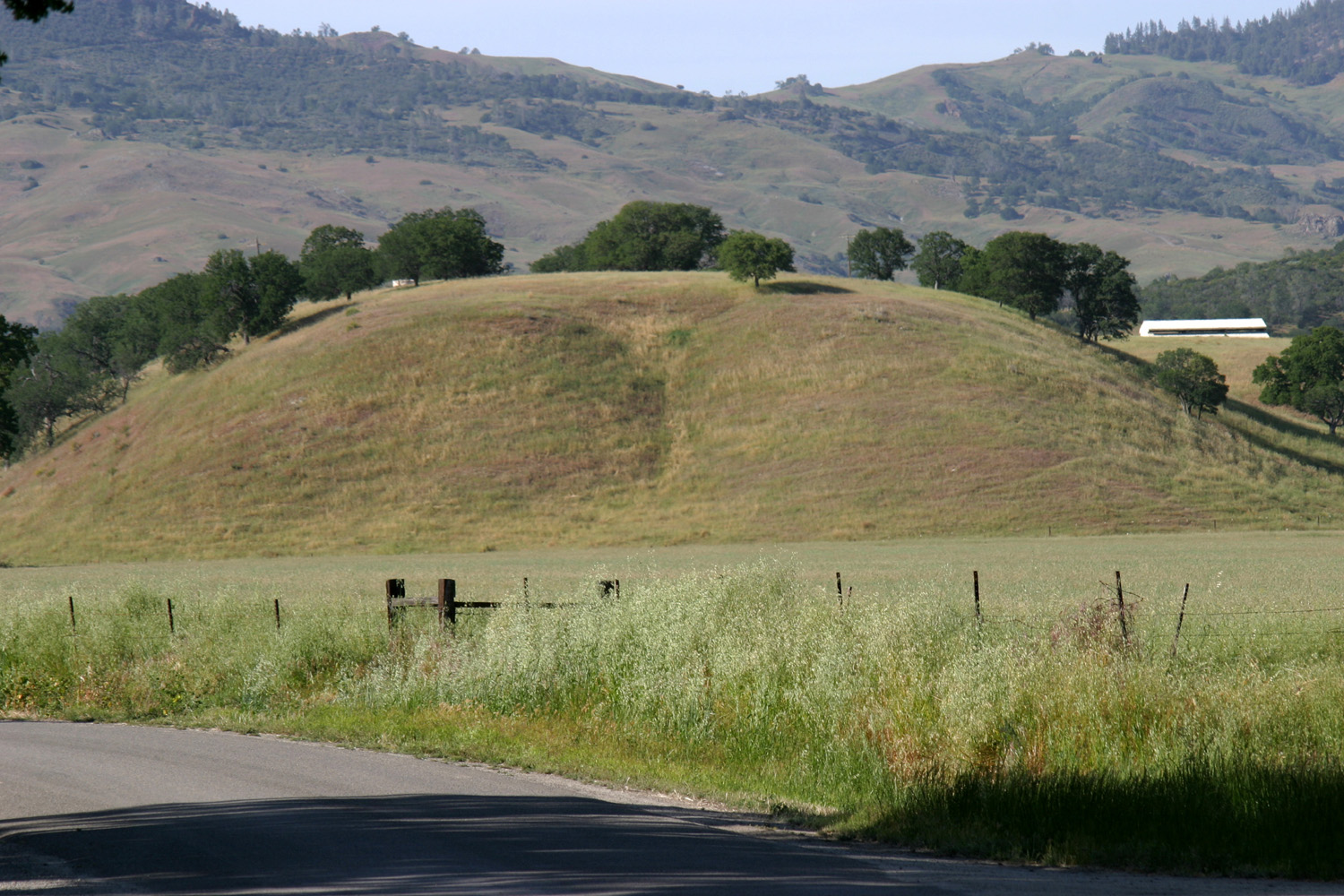
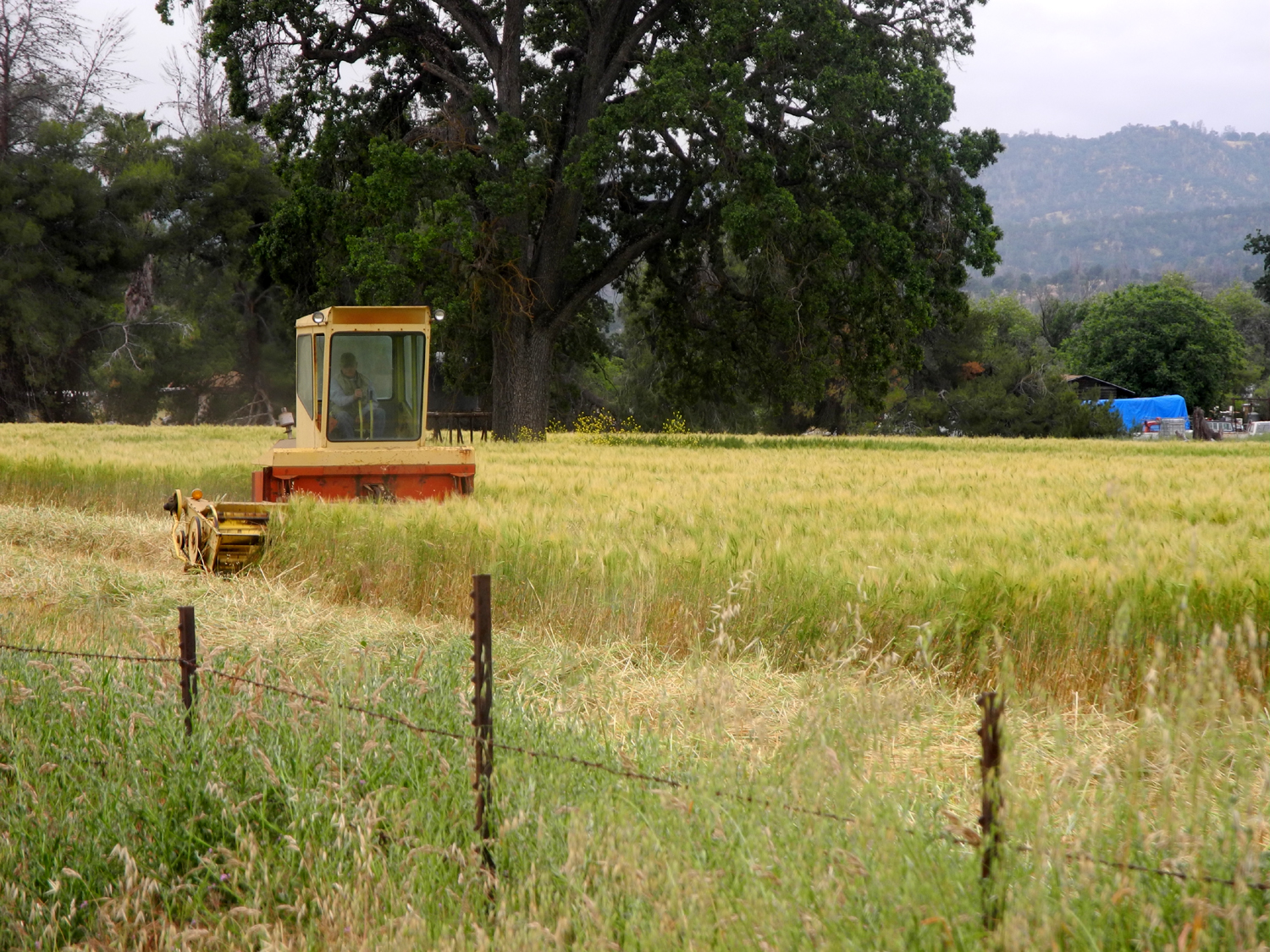
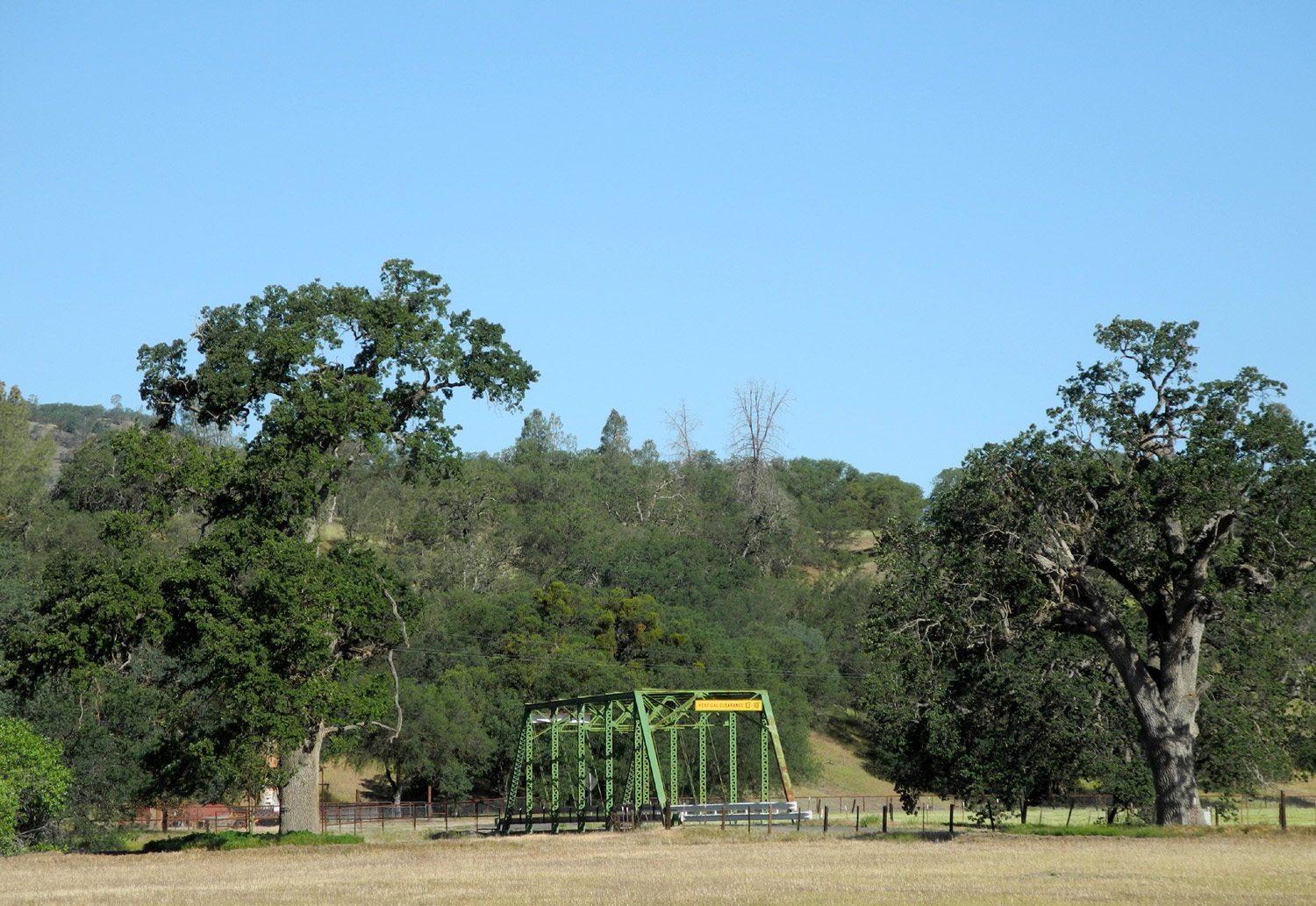
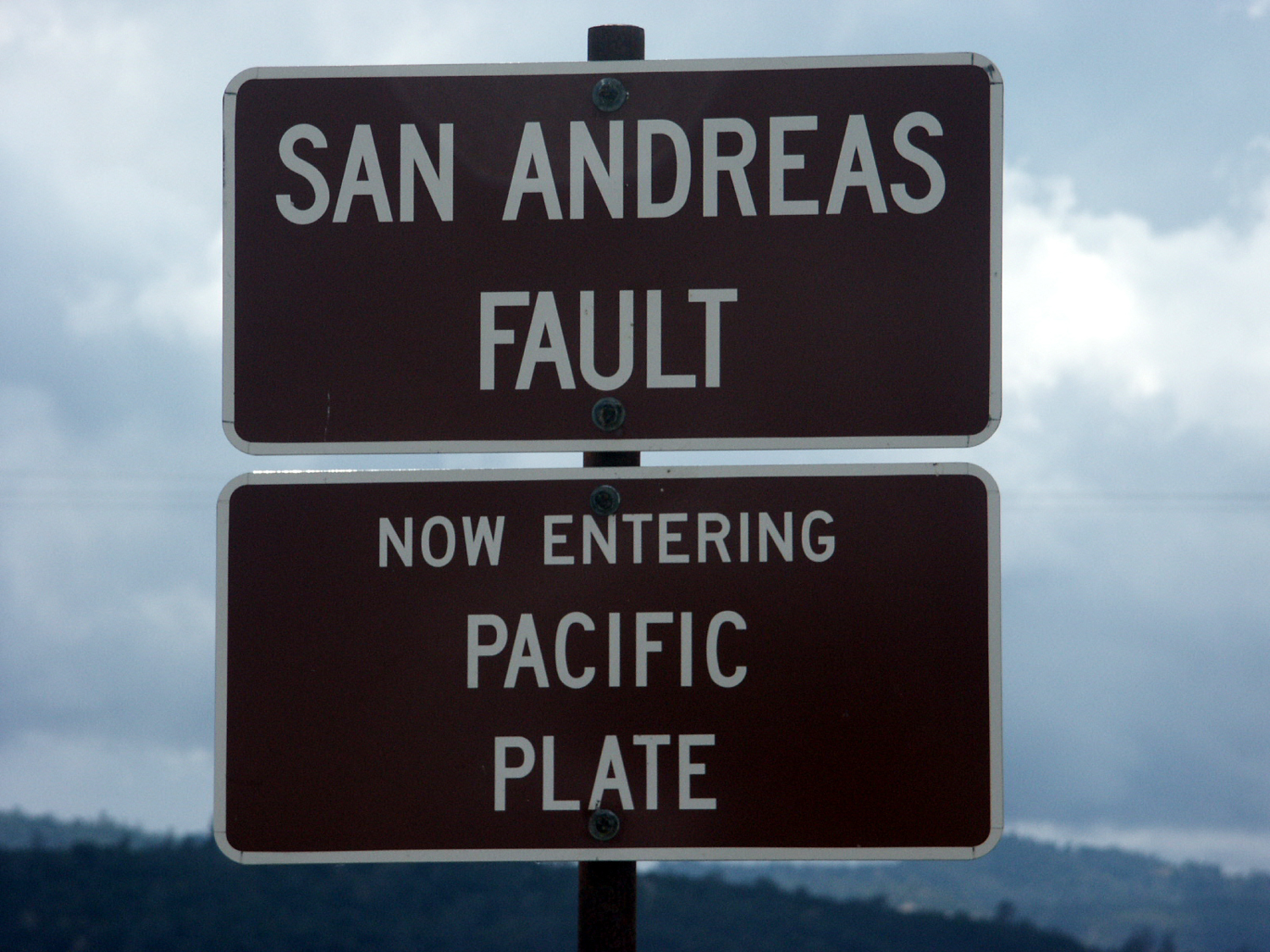
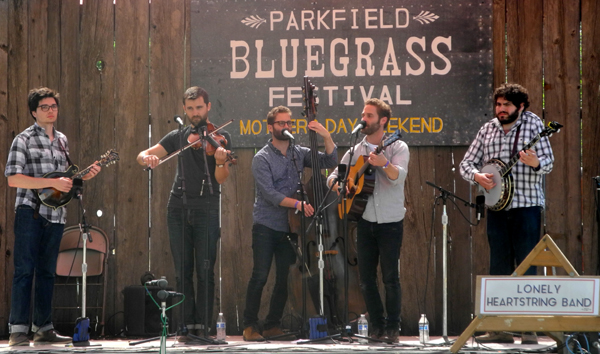
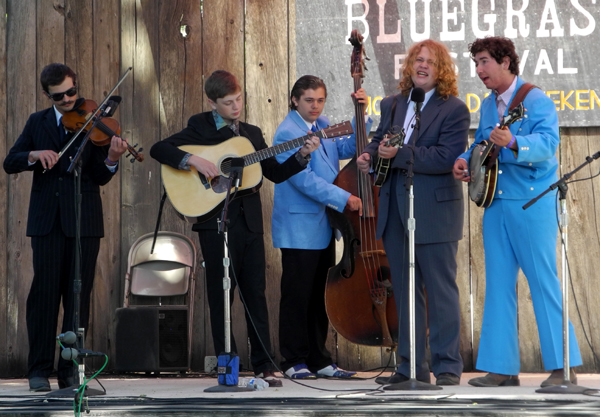
Chapter 28 Chapter 26 Chapter 27 Chapter 29 Chapter 30 In 2017 the Parkfield Festival was once again the only one I attended. I’ve mentioned a number of times that at most festivals I see a group that I consider a "revelation" - one I'm not familiar with, but which stands out above most of the others. The group that best fit this definition this year was the Lonely Heartstring Band from the Boston area. They do a lot of stuff that's not quite bluegrass, but when they perform a bluegrass song, they do it right. The vocalists are good and they are all highly skilled on their instruments. An interesting note is that the bass player also performs with the Boston Symphony Orchestra. There were three groups consisting of young players, some of whom I've seen at the Kids on Bluegrass segments that are a part of most festivals. Most of the people in these bands were 15 to 20 years old, so there were some vocalists that would improve with age, but for the most part they were all good or great players. The Blue J's included Jack Kinney from the Fresno area, who has appeared with various groups at the summer Bluegrass in the Park series in Clovis. He was probably 14 and "good for his age" when I first saw him; now he's just plain good. He plays all the usual bluegrass band instruments (fiddle, mandolin, banjo, bass, guitar), but stuck to fiddle with the Blue J’s. The rest of the group consisted of the three Gooding Brothers, whose father played with the Central Valley Boys, and their best friend Jesse Personeni. Pacific Drive was a group from various Bay Area cities. age 18 to 22. They had been jamming together since the youngest members were about ten years old. Vocalist Helen Foley had a mature sound, and all were good on their instruments. Blue Summit was the best of the three "young bands," and featured A.J. Lee, once known as "the little girl with the big voice." I saw her at age 11 and even at that young age her singing abilities were well beyond her years. By this time she was just plain outstanding. She was joined by Sullivan Tuttle, a member of the Tuttle Family which A.J. played with for years, along with three other highly skilled players who were not familiar to me. When I first saw Sullivan about age 15, I thought he was probably the best kid guitar player I'd ever seen. However, I'd never seen him open his mouth, so I was somewhat surprised to read that the Northern California Bluegrass Society had named him male vocalist of the year. When he sang at Parkfield, I realized the honor was well-deserved. He has a very pleasant, very deep voice. My final decision was that this group was a couple of levels above the others and more than that vocally. There were another three bands that stood out, all of them familiar to me. Snap Jackson and the Knock on Wood Players were back at Parkfield for their eighth straight year, and happily, bass player Brian Clark was back with the group. They do a mix of traditional bluegrass, old time, and indefinable music. Snap usually plays banjo, but breaks things up with the ukulele from time to time. The Cache Valley Drifters got started in the 1970s, and have retired and then gone back to "work" once or twice. This was another band that did not adhere strictly to traditional bluegrass, especially now that they were a three-man group. Their lead vocalist was in the running for best singer at the festival. Sawmill Road was actually no longer performing together, but reformed for a brief reunion tour, consisting of Parkfield and the California Bluegrass Association's Father's Day festival in Grass Valley. Banjo man Dick Brown was a part of Lost Highway, who appeared at one of the first festivals I attended, in Mariposa about 20 years ago. I've seen him in several other combinations over the years, and usually have enjoyed a brief conversation each time. Also well known to me, also first seen at Mariposa, is guitarist Charlie Edsall, who does some nice vocals. Doing most of the singing and playing bass was Steve Spurgin, a self-described "old folkie" who wrote the popular favorite, "A Walk in the Irish Rain." The other two members were both top level musicians, known to me only through their work with Sawmill Road. The other groups all belonged to that OK to fairly good category which is essential to fill out a four-day program of bluegrass music. To no one’s surprise, I did some walking each day, and Parkfield is a great place for that. It's all flat, and all walking is on roads with almost no traffic, but the surroundings are unique – rounded hills that rise up abruptly from the level valley on one side, oak-covered hills not far away to the west. This is ranching country, although you don't see many cows close to town. Instead you see fields of hay, and it looked as if the heavy rains that year had produced an excellent crop. Some of it was already cut and lying in rows drying out for baling, but for the first time I saw a mowing machine in action. On Friday morning I walked north on Parkfield-Coalinga Road, the main route through town, which turns to dirt after about five miles, and goes over the hills to Coalinga. I didn't go that far of course, my goal was to walk to the green bridge over Cholame Creek, which makes for a two-mile round trip. On Saturday I just walked around town, going down every street, and through the various camping areas. “Every street” is not as challenging as it may sound. It means Parkfield-Coalinga Road, Oak Street, Park Street, 2nd street, and then into the rodeo grounds area where most people camp. Still, this walk added up to 1.14 miles. By the way, Parkfield-Coalinga is the only paved road. The Sunday program included things that didn't interest me, plus groups I had seen the first three days, so I had already decided to leave once I had finished breakfast and a walk. I went south on Parkfield-Coalinga Road out to the bridge that crosses Cholame Creek and joins the road that runs from Highway 41/46 to US 101. Crossing this bridge takes you from the North American Plate to the Pacific Plate, meaning you are crossing the San Andreas Fault. I had walked this way in the past, but had always turned north on to Vineyard Canyon Road. This time I took Cholame Road to the south for a few hundred yards, then returned to camp, a total hike of 1.4 miles. I left for home around 10:30. The return trip was uneventful, although I arrived in Clovis to find that the weather there was unexpectedly cool and breezy, always a good thing 1when you have to deal with unloading the vehicle, and taking it back to storage. |
|
|
|
| Lonely Heartstrings Band | The Blue J’s |
|
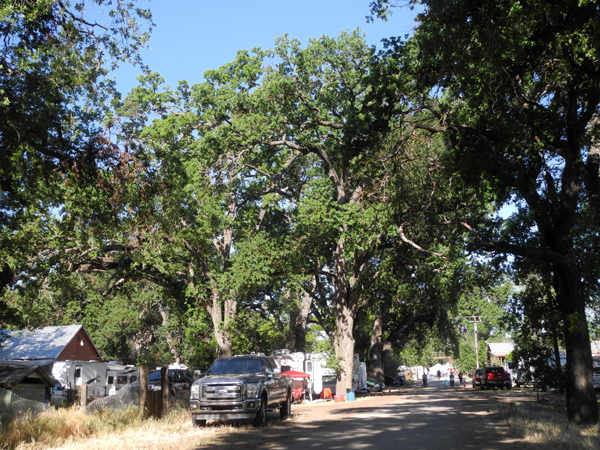
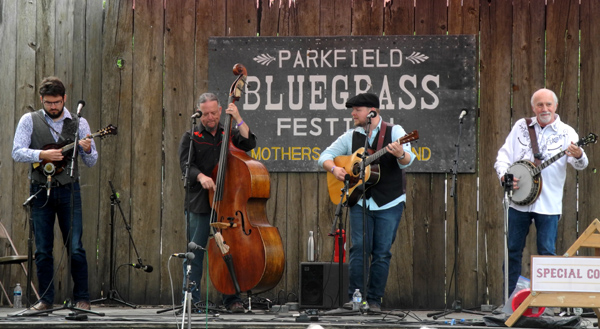
Chapter 29 Chapter 26 Chapter 27 Chapter 28 Chapter 30 The Parkfield Bluegrass Festival started in 1999, under the name Camp Rude Bluegrass Festival. I was attending another May festival in Mariposa in those days, and did not go to the first two Parkfield events. Since then I have missed only one. The year 2018 was the 20th. In the previous few years it was necessary to make reservations for an electrical hook-up the day they are announced, and overall attendance has increased annually for the last few years. This year it was hard to find enough space for everyone's lawn chairs, and camping space was nearly full. Every year there have been a couple of groups I was not familiar with that that really stood out and became new favorites. Probably the best in 2018 was the Sonoran Dogs from Arizona. They were actually at Parkfield in 2015 but apparently did not make much of an impression on me at that time. This year I rated them the number two band at the festival, behind only Jeff Scroggins & Colorado, making their third appearance. Several other bands new to me were in contention for "not previously heard but amazing." Echo Mountain, an old-time music group from southern California was excellent, as was another band playing a similar style, Molsky's Mountain Drifters. This band was apparently famous in bluegrass and old-time circles, but I had not heard of them. FY5, another Colorado band, was very good, as was Phil Salazar and the Kin Folks. Phil appeared at the first four or five Parkfield festivals, but I did not recall much about him. He's a first rate fiddle player with a pretty good band, and I really enjoyed their performances. Another returning band also got high ratings from me. AJ Lee and Blue Summit is led by Ayissa Lee, who I first noticed at Brown Barn when she was about 11 years old. Her voice was amazing then, and now at age 20 she had developed a mature sound that makes her a standout. It does not hurt that her band includes Sullivan Tuttle, one of the hottest young guitar players in the state. The rest of the groups fell into the good but not great category. Perhaps the most famous artist there was Missy Raines, performing with two other musicians as the New Hip. She has a beautiful voice, but the music this group is doing is way beyond bluegrass. It was skillful and interesting, which does not mean enjoyable. A couple we met at our first Parkfield event, Rad and Tele Spurlock, were there as usual. We started chatting at the 2001 festival when they asked about my grandson Mikie, who was folded up in a little wagon sleeping, and my daughter and I have kept up with their family as they have with ours. Tele had experienced some recent health problems but was in good spirits and carrying out her usual volunteer work fixing and serving food for the bands. When I checked back a year later, I was delighted to hear that her medical problems had been resolved. The weather cooperated this year - not too hot, no rain, and very cool in the evening. Thursday afternoon was a little warmer than I like, but it cooled off the next three days. Friday morning it got down to 37 degrees at 6 a.m. A worrisome overcast Saturday and Sunday mornings cleared off by mid-morning. I had decided to head home after breakfast on Sunday, having already seen all the groups scheduled for that day. Of course, I don't rush. Walking, eating, washing dishes, and getting things ready to travel put me on the road home a little after 11 a.m. Not to keep you in suspense, I’ll conclude this chapter with the next year’s Parkfield festival, 2019. This was the 21st annual, and the 18th and final one that I attended. My route to Parkfield goes south on Highway 41 through Kettleman City on the west side of the San Joaquin Valley, over the Kettleman Hills and across Pleasant Valley, over some more hills and across Sunflower Valley, over STILL more hills and into the Cholame Valley. Where Highway 41 meets Highway 46, I turn north on Cholame Road for the final 15-mile stretch into Parkfield, population 18. I've been there when there were no events going on, and it is not unusual to see no one except the workers in the cafe. On Mother's Day weekend however, the population expands to around 1,000, with several hundred RVs, dozens of tents and smaller camping vehicles, and a respectable number of day visitors. This year, for the first time, all camping space sold out, and additional parking overflowed into a newly mowed hay field. As usual the groups ranged from average to great. There is nothing negative in being called average – members of any group that gets hired to perform are very good on their instruments, and at least competent vocally. There were groups that played very traditional bluegrass, those who took the genre way beyond the borders laid down by Bill Monroe, and one that played old time (pre-bluegrass) music. The best of the best was a group I first saw on the Nashville Network show Fire on the Mountain in the mid 1980s. Banjo player Greg Cahill started Special Consensus about 1975, and has kept it going continuously ever since. The other band members have changed over the years, and the band has been kind of a finishing school for artists who often go on to lead their own groups. They play mostly traditional bluegrass and were a big hit with the crowd. AJ Lee made her first appearance at Parkfield in 2016, and was back the next three years as leader of AJ Lee & Blue Summit. Her band lineup was unusual, AJ on mandolin, plus bass and two guitars (a fiddler joined them for one set). One of the guitar players was Sullivan Tuttle, who was spectacular at age 15, and whose abilities by now were beyond my capability to describe. I bought their latest CD, and it was great from start to finish. There was very little bluegrass on it, but they showed at Parkfield that they can still ramp up a hot bluegrass song. Bluegrass has spread around the world, and there are musicians, festivals, and pockets of fans in many countries. Amber Cross just returned from Ireland, and AJ is touring the British Isles soon. However, I have seen only one group, Switzerland’s Krüger Brothers, that was 100% from another country until this year, when the Slocan Ramblers from Canada appeared (the Jaybirds, whom I've seen a couple of times, are about 60% Canadian). The Ramblers played hard-driving traditional music with a four-piece band. Last year brought a "blast from the past" when Phil Salazar and the Kin Folks returned, after having appeared at the first four or five Parkfield festivals. This group from southern California is another traditional band, and they got the crowd roused up again this year. There were two bands comprised mostly of young people who I've seen at festivals since they were little kids. Mission Blue grew out of a family band that included Dana Frankel and her father Avram. She has developed into a good vocalist and fiddler. They were joined by other veteran Bay Area bluegrass musicians, including Dave Gooding on bass. Dave has also produced three sons who play in various groups and are outstanding pickers. North Country Blue featured four girls who had developed their skills in the Kids on Bluegrass program and with family bands. I saw Tessa Schwartz when she was seven and playing with Oak Grove, which included her parents and brothers Max and Nate. Ida Winfree is the daughter of Jason Winfree, long-time member of Red Dog Ash from Turlock. I'm not familiar with Megan January, who I thought was the strongest vocalist of the group. Tessa is the main spokesperson for the band, and handles these duties with professional aplomb. Joining them on guitar was John, one of the magnificent Gooding Brothers. Of course, I would be remiss if I did not give recognition to Snap Jackson & the Knock on Wood Players. This is another band I first encountered at that fateful 2009 Brown Barn Festival, and they had become one of my favorites. This was their 10th year at Parkfield, and in honor of that milestone, they performed ten songs that they had never before played in public. I did one other thing that I almost never do - attended one of the workshops. At virtually every festival, members of various bands give workshops on their instrument, or singing, harmony, song writing, and other related subjects. I will never play the banjo, but it is sometimes interesting to hear the information provided, so I went to the workshop conducted by Greg Cahill, along with two long-time California banjo pickers - Julio Boysenberry and Banjer Dan Mazer. The most interesting thing was information they presented on how a slight change in how you hold your hand makes a difference in how good you sound. I want to finish this report with a salute to all those who made this festival possible over the years. Pat and Rosie Conway got it started and ran it for several years. I wish I had thought to ask them how and why they chose this incredible but remote location. Joe and Darlene Quealy stepped in and took over when the Conway's were ready to move on. Then a group of central coast bluegrass fans formed the Bluegrass Music Society of the Central Coast, and have been the promoters for around ten years. I don't know everyone involved, but the festival director was Dave Schwartz, and Connie Moxness always made sure I got a camping space with electrical power. Finally, the Varian Family, owners of the ranch land in the north end of Cholame Valley, have been big supporters of the event. John and Barb have made regular improvements to the venue, including a permanent stage that doesn't wobble like the truck bed used at the earliest festivals. As I drove home I realized I had not taken the motor home out of storage since the previous year’s festival. I was very uncomfortable driving that big vehicle through the windy canyons of the coast range. It was 28 feet long and 11 feet high at the top of the roof A/C. I had already been transitioning to truck camping for my Sierra foothill and mountain outings. Once I had it cleaned out, I sold it to a dealer in Clovis. SO: I went to Parkfield 18 times, to Kings River/Hobbs Grove 9 times, Plymouth 6 times, and racked up a total of 56 festivals, 8 of them for one day only. There will be one more chapter with some final thoughts and observations. |
|
|
|
| Downtown Parkfield | Special Consensus (Greg on the right) |
|
Chapter 30 - Final Thoughts Chapter 26 Chapter 27 Chapter 28 Chapter 29 So what have we learned? Or more to the point, what did I learn and what do I think as I look back at over 20 yeas of attending bluegrass festivals? First, I miss going to bluegrass events. I had already started transitioning to camping with my pickup. But that type of camping would not work for me at a bluegrass festival. I do not like sleeping in a tent; I want to look up at the stars as I fall asleep. I haven’t owned a tent for 20 years or more. Sleeping in the open among dozens of other campers and late night pickers was not an option. Plus, I get up a number of times each night. Patronizing the porta-potty at night had no appeal whatsoever. I could go to a festival if there were a motel nearby (the Parkfield Lodge is fully reserved for the artists). Since I no longer drive after dark, I would need a traveling companion to get me to the motel late at night. I also miss the motor home. Not driving it, but having it to live in wherever I camp. I DON’T miss the storage fee, the insurance, and the inevitable maintenance costs. Overall, I’m content with my decision to sell it. A confession: While I wrote every word of these reports not presented in quote marks, I wrote many of them some time ago. When I took my truck and travel trailer back to Ohio shortly after my retirement in 2002, I started sending a daily email about the trip to some family and work colleagues. Other people asked to be included, and eventually it evolved into a write-up on every camping trip, hike, bluegrass festival, and some of my other activities, and a mailing list of 80 or so. This gave me plenty of material to jog my memory and often a few paragraphs that I could copy almost verbatim. Since few of those readers shared my interest in bluegrass, those write-ups emphasized personal and non-musical aspects of the festivals. You can find links to all this material here. Due to the pandemic, the Parkfield Festival was not held in 2020 and 2021. I’m still on their mailing list, so I know that it’s still going. This made me wonder, what other festivals are still in existence, and how have they changed? As of mid-summer 2026, the last Logandale festival had been in 2016, but the sponsoring organization, the Southern Nevada Bluegrass Society held a festival at Craig Ranch Regional Park in 2017. Bands that I had seen included the Get Down Boys and the Navy Band. Huck Finn was on for October 2026, but the location was San Dimas, east of Los Angeles along the I-10 and I-210 freeways. Summergrass was on for mid-August with Next Generation (a bit of an old generation by now) and Bluegrass Etc. with Steve Spurgin. And Special Consensus! (I wanted to go.) An Internet search for Brown Barn brought up my own 2011 report, so it looks like that event has run its course. A Facebook announcement documented the ending of the Colorado River festivals in 2018. Bluegrass on the Beach in Lake Havasu took place in March 2026 and was scheduled for 2027, with Special C and Monroe Crossing. No longer run by Larry & Sondra Baker, it was “brought to you by Danny Stewart’s Productions LLC.” The Bakers’ other location in Plymouth CA is “retired,” but a web search states “the traditional Plymouth Bluegrass Festival in California has been succeeded by the Frankly Bluegrass Music Festival, held annually at the Amador County Fairgrounds in Plymouth.” Honoring the late Frank Solivan, it was held in 2024 and 2025, but was canceled for the following year. Kings River had become a camp and jam, no formal band presentations. Superstition Mountain is no more. Mariposa of course ended as soon as I started going. But the Good Old Fashioned Festival was on for August. I think it will keep going as long as NCBS president Mike Hall does. I’ve mentioned that most festivals offer t-shirts and sometimes sweatshirts and hoodies, usually with the festival name on the front and the band lineup on the back. For a long time I always made sure to buy a t-shirt. This extended to national parks and other places I visited, until I realized I had at least 75 t-shirts. That seemed like almost enough, and I became picky – it the design was kind of blah, I skipped the shirt that year. Even so, I have a page of t-shirt photos on line. . I still often attend Bluegrass in the Park in Clovis on Friday nights during the summer. I recently saw Dee Richter and Adam Johnson at the Big Fresno Fair, performing free at an outdoor patio. And if I can convince someone to go with me, I hope to go once more to the Good Old Fashioned Festival. There does not seem to be much acoustic music on TV that’s readily accessible to me. I watch the Dailey & Vincent Show, featuring Jamie Dailey formerly of Doyle Lawson’s band and Darren Vincent, Rhonda’s brother and former member of their family band, The Sally Mountain Show. Their show does not have much bluegrass but it has good music. However,
I am not deprived. I have a lot of bluegrass that I recorded from the
TV on DVD, including most of the Fire on the Mountain shows
from the 1980’s and Ronnie Reno’s Old-Time Music from early
in the 21st Century. And I have about 1,500 CDs, of which a few hundred are bluegrass. And one more thing - early in this series I finally learned how to spell ODYSSEY. --Dick Estel, October 2026 |
|
|
|
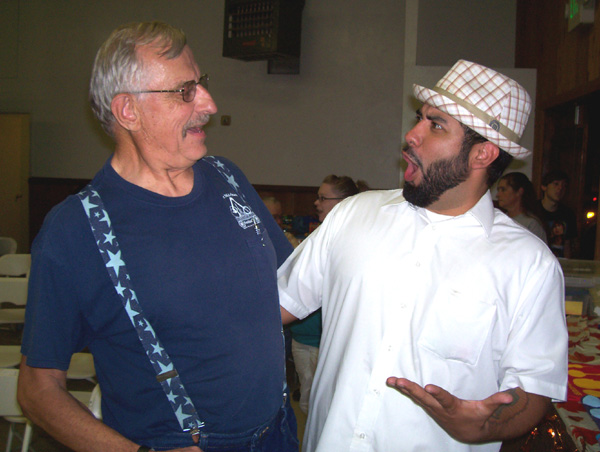
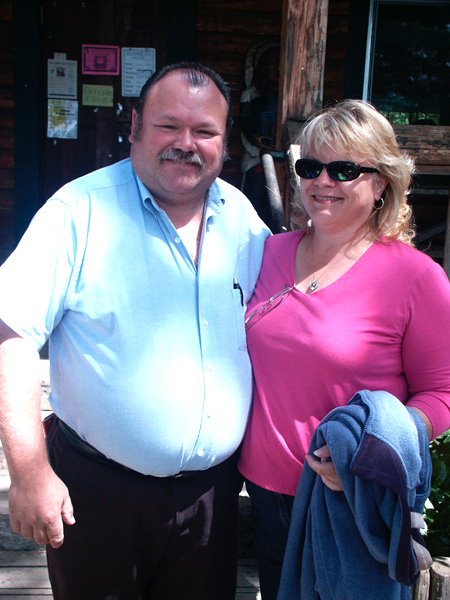
| You again?! | James King and Janell |