|
Dick's Bluegrass
Odyssey Volume 4 |
|
| Related Links | |
| Chapters 1 - 4 Chapters 5 - 8 Chapters 9 - 12 Chapters 13 - 16 | |
|
The first five chapters of this series originally appeared in the Fresno Folklore Society Flyer. It was decided to discontinue publishing them and make them available only on line. It should be noted that information about most of these festivals has been included in my travel reports. But those pages were written for a general audience, while this series is aimed specifically at fans of folk music. --Dick Estel, September 2026 |
|
|
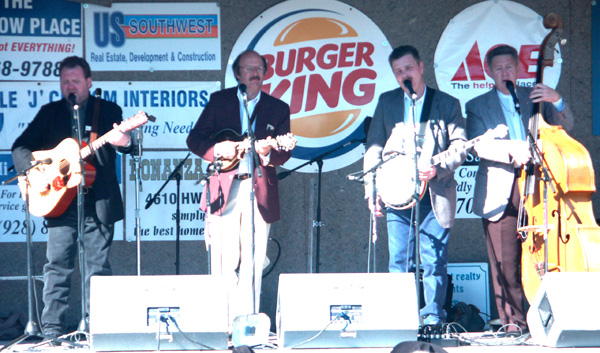
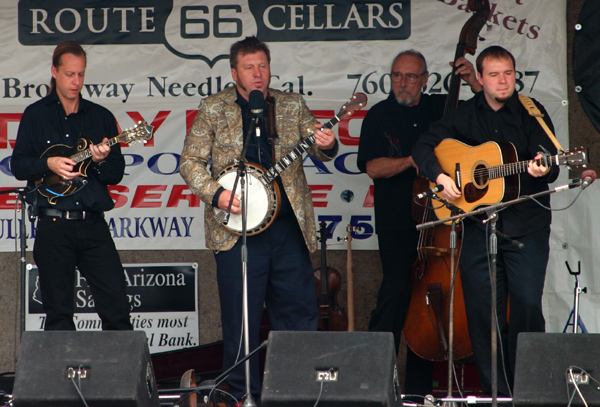
My Bluegrass Odyssey Chapter 13 Chapter 14 Chapter 15 Chapter 16 by Dick Estel The next stop on my travels between Bakersfield, Phoenix, Bullhead City and Joshua Tree National Park was the Colorado River festival in Arizona, right across the river from Laughlin NV. This was my third and final time at this festival It was a great first day of music, with a couple of old favorites, and some new bands that proved to exceed expectations. The best group the first day, never seen or heard before, was the Colorado River Boys, a group from the Blythe CA area that has been together for over 20 years, with only one lineup change. They had no banjo and no fiddle, and their music was not really bluegrass, more like cowboy groups such as the Sons of the Pioneers would do. The mandolin player had a unique style, mostly a lot of single string picking, which fit perfectly with their songs. The two main singers were outstanding; one is Hispanic and did some songs in Spanish. Also enjoyable and entertaining was the Bost Family Tradition, about whom I wrote at the time: “Family bands can be a mixed blessing, and this one is not without its drawbacks, but overall they were fun to watch and hear. The two girls (age 11 and 13) who do most of the singing lack some polish, but they have powerful voices, and a little work on enunciation will bring them up to professional level within a few years. The rest of the family members were good on their instruments.” A group I’d seen and enjoyed, and was wishing I could see again was Cliff Wagner and the Old Number 7. He’s from Mississippi via New York, was living in San Pedro CA, and did very traditional, Jimmy Martin style material. Due to a cancellation by Mountain Heart, Wagner appeared again Saturday and Sunday. The weather, for the first time at this location, was exactly as you would order it – light clouds most of the day to keep it from being too hot, temperatures around 75, and just a light breeze. It was cold and windy and cold and rainy the two previous times I was there. The bigger name groups played on Saturday, and all were excellent. Entirely new to me were the Krüger Brothers, from Switzerland, who were then living in the Carolina area. They did what I consider to be “newgrass” or “progressive” bluegrass. I usually describe this type of music as “more fun to play than to listen to,” but this group was the exception, and they did a lot of stuff I liked. Because of a cancellation they played a second set, during which they did “stuff we usually don’t do,” and I liked this even better. My favorite of the day was Karl Shifflett and Big Country Show, whom I’d seen at least three times before. He is a Texan, and some of his music is only a steel guitar away from being honky tonk, but there’s nothing wrong with that. He does a lot of traditional Flatt and Scruggs material. The other group that I was looking forward to most was Ronnie Reno and the Reno Tradition. His father, Don Reno, along with Red Smiley, was one of the early pioneers of bluegrass, starting their recording career in 1951. Ronnie played with them as soon as he was tall enough to reach the microphone (standing on a milk crate), and has carried on his father’s legacy in a number of ways. He was one of the leaders of Blue Highways TV, which had various traditional music shows on the RFD cable network. His show, Reno’s Old Time Music Festival, featured interviews with and performances by, the top names in bluegrass, and also presented clips from Reno & Smiley’s TV show of the 1960s. There was a special surprise when Alicia Nugent, an up and coming young bluegrass singer, appeared on stage with Reno and sang a couple of songs. She is going to appear "officially" at the festival next year. The day concluded with a joint appearance by Reno’s band and Lost & Found, another group I’ve seen several times. They reminisced about Don Reno’s career and performed an entire set of songs he and Smiley either wrote or made famous. It was one of the best shows I’d ever seen at a festival, so whatever happened after that was pure gravy. When this event concluded, it would be seven months before my next festival. My sister in Duluth had announced that she was coming out for Mother’s Day, and of course I wanted to be present also, so for the first time since I started going, I skipped the Parkfield Festival. It was well that I did, since it turned out to be my Mother’s last Mother’s Day. She died on August 1 at the age of 89. On to happier subjects, it was back to Plymouth in September. Like all events promoted by Larry and Sondra Baker, this event was well-organized and everything ran smoothly. Setting up the trailer required a little more effort than usual this time. I was up on a hillside, so I had to block up the wheels on one side. A 2 x 6 or a 4 x 6 are the most I’ve ever needed before, but I had to put two more 2 x 6 boards on top of my 4 x 6’s to get the trailer level this time. For my “off day” exploration on Thursday I re-traced my route back 11 miles to Ione. I walked around the three-block main business section, and checked out the town park and a thrift shop. Next I ordered a pizza at the Pizza Factory. If you ever find yourself hungry in a small town, look for this franchise. With rare exceptions, they all provide excellent pizza and good service. Since I was still full from breakfast, I took my lunch back to Plymouth, ate in the trailer, and took a nap. Several groups unknown to me appeared on Friday. My favorite of the day was Nothin’ Fancy. I had read about the band but had not heard them that I know of. They put on an entertaining show with music and humor. Equally good was the Williams & Clark Expedition. They are all long-time musicians, including a banjo player who worked with Lester Flatt, and for ten years with Bill Monroe. Lorraine Jordan & Carolina Road also delighted the crowd with their set. The
U.S. Navy Band was at the top of the pinnacle as always, although we
got some sad news – a couple of its members were getting ready to
retire. No doubt they will find equally qualified replacements. The weather was cooperative, a bit warm during the middle of the day, but with a good breeze all the time, and cooling off slightly by 3 p.m. In the evening, I needed several layers by the end of the show, but it was never unpleasantly cold. My favorite on Saturday was Sawmill Road, which included several musicians I was familiar with. Lead singer Steve Spurgin is a well-known singer-songwriter. Banjo player Dick Brown was a long time member of one of my favorite bands, Lost Highway. I’d seen the late fiddler Bruce Johnson in other bands, although I don’t recall which ones. And singer-guitarist Charlie Edsall played with Ron Spears and Within Tradition for a number of years – sort of a mid-level bluegrass super group. I had a pleasant surprise Saturday. I was watching the morning show when I heard my name called – and there was Bryce Green, a member of my high school class. Like most of my classmates, I’d seen him only once or twice over the 50 years since we finished high school, but we’d talked briefly at a funeral several months ago, and discussed bluegrass at our 50 year reunion in June. He and his wife, Alma Rhoan Green, had gone to their first bluegrass festival in February, and had a good time. I told them about this festival and encouraged them to attend. Their schedule made it impossible to decide in advance, and they were able to come only for Saturday. We had a good visit, had dinner together, and agreed that we should return next year. You’ll read more about the Greens, and of course, more bluegrass bands, in future chapters of this seemingly endless report. |
|
 |
 |
| Lost and Found | Cliff Wagner & Old No. 7 |
|
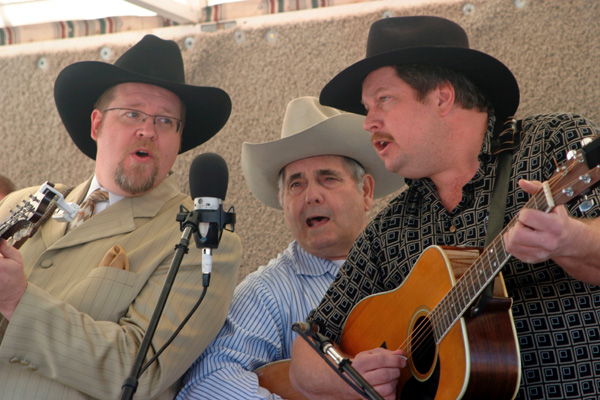
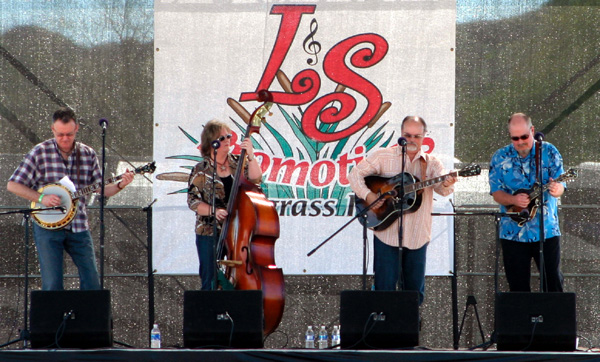
Chapter 14 Chapter 13 Chapter 15 Chapter 16 The year 2008 dawned with two festivals coming up very soon in February, and two more later, in May and September. The first was the disturbingly-named Soggy Mountain Festival at Quartzite, Arizona. This town is where US 95 running north and south meets the east-west Interstate 10. There are a number of official campgrounds, and a LOT of people camp out in the desert, on BLM land, with limited facilities. Like so many, this festival was part of a longer trip, which started in Las Vegas where my then 10-year old grandson was playing in a hockey tournament (badly overmatched, they finished fourth in a field of four teams, but had fun nonetheless). I arrived at the festival location a few days early, and spent a good part of one day driving south and hiking into Palm Canyon, a moist, shaded area in the hills where a number of California palms thrive, in spite of the arid surroundings. After the festival I visited two of my Mother’s cousins west of Phoenix, and did some hiking and camping near Wickenberg. I’ll save what came next for later in this report. The festival, promoted by Bill Bogan, was at the Tyson Wells RV Campground, and I set up my trailer next to my friends from Mariposa, Bryce and Alma Green. His half-brother and a cousin with their wives, each had their own trailer on the grounds. Wednesday evening Bryce made shish kebob for all of us, a total of seven people. He is quite an accomplished cook, and it was excellent. After dinner we had a pretty good look at the lunar eclipse. It was partly cloudy and very windy, but the clouds cleared away several times, including once when the eclipse was almost complete and the moon was an orange glow. The festival got under way Friday, and lived up to its first name. We had a slight sprinkle Tuesday night, then it was sunny and warm. Rain started about 6 a.m. Friday and continued off and on most of the day. Fortunately they had the festival sound on a low power FM station, so I was able to listen while staying out of the rain. I did sit out for a while during two or three groups, but mostly stayed in the trailer. The rain stopped in time for the final group of the day, which was that group that I always find – not known to me, but way above average. In this case it was the Wildwood Valley Boys, which is more or less descended from a group I did know, the Boys from Indiana. The latter no longer existed, but I had heard them on XM Radio, acquired a reissue CD of some of their songs, and was highly impressed. The Wildwood Valley Boys included the lead singer-songwriter from BFI as well as his son, who did most of the lead singing for the newer group. Bryce also liked the group, vowing to buy their CDs when they returned the next day. The rest of the groups, new to me or not, were mostly average. One that I enjoyed seeing, although still average, was Digger Davis & Tombstone. He was the banjo player with the Liberty Bluegrass Boys, a group from Texas that I saw twice at Logandale. His current group consisted of his wife, son and daughter, all of whom played competently, but did not have much vocal strength yet. I also always enjoyed Cliff Wagner and Old No. 7, who I’d seen at least a half dozen times. He was a California transplant from the bluegrass country of the US southeast. The band had been on The Next Great American Band show a few months previously, and returned for a number of appearances, but did not make the final cut. Actually I was amazed that a bluegrass band was even on the bill, but the group emphasized their non-bluegrass side on that show. The festival ended with a bang. Eric Uglam & Sons were the closing act, and were better than the day before. In fact, some of the groups I called very average seemed better, or maybe I was less fussy. At the end of the show, many festivals have a bunch of musicians from different bands come on stage for a big finale, and this one was the best I’d ever seen. With 13 pickers on stage, it can be a bit disorganized, but promoter/singer/mandolinist Bill Bogan would say “you and you sing this” then “you and her sing that,” eliminating the confusion. Of course, everyone else was able to join in, picking and/or harmonizing. It was almost like a planned and rehearsed set, and a great ending to the festival. After my side trip to visit relatives near Phoenix, it was on to Parker for the Bluegrass on the River Festival. Once again I met up with the Green’s and the Upton’s (Bryce’s brother), and repaid their many dinners by taking them out to eat at a nearby casino where they had camped between festivals (free, no hookups, and lots of nearby temptation). The music the first day started late because of a power outage, but once underway, the festival was good to great. I had previously seen all the groups that performed that day except the Gibson Brothers, and since I had two of their CDs, I knew they would be good. Overall I thought they were second only to the Navy Band, which surpasses most groups in the bluegrass world. Other performers that day were Honi Deaton & Dream, who I saw at the first Plymouth festival I attended, the Bluegrass Brothers, who I had seen several times, the Chapmans, my third time to see them, and Williams & Clark Expedition, who were at Plymouth in 2007. We had a great finish to the day with a steak dinner, barbecued by Bryce, along with fried potatoes, cheese cauliflower and coleslaw. My contribution was a card table so we could eat outside, and Reese’s peanut butter cups for dessert. Saturday was a great day of music, with the standouts being once again the Gibson Brothers, the Navy Band, and a group I’d heard of but not heard, Monroe Crossing from the great bluegrass state of Minnesota. It was the final appearance with the Navy Band of lead singer and guitarist Wayne Taylor, who was retiring, but planned to continue in bluegrass. He wrote many of the songs they performed and sang lead on most of them. They did an extra long set to close out the day. Then I wrote: “The weather has been close to perfect. Last night was probably the warmest night of the trip, and the first night that I did not close all the windows. It was still cool, and felt good to get down in the sleeping bag after getting up during the night.” The good weather ended with a bang about 2 a.m. Sunday, when a big wind came up and started rocking the trailer. With my awning flapping and threatening to rip, I got up and took it down. By morning the wind had blown over most of our lawn chairs, and blown trash and some other items, including a collapsible canvas trash barrel, into our camp. I had left windows open in the trailer, and had to contend with a layer of fine dust all over the counters on that side. Bryce had left the windows of his pickup cracked slightly due to the warm weather Saturday, and had a major layer of dust all over inside. The wind also took down a large wooden pole, one of six that held up a big shade over the audience area, and ripped the shade to shreds. The pole damaged about a dozen lawn chairs, and most of the others were blown over or missing. The power went out, and for a while it looked as if the show would be cancelled. However, the crew got generators going and the show started only about an hour late. The lunch break was eliminated so the show ended on time, with good music throughout the day. Digger Davis & Tombstone made their first Parker appearance, and were well received and sounded better than in Quartzsite. We also had two sets by Frank Ray and Cedar Hill, an excellent traditional band that I’d seen before in Plymouth. We also enjoyed Sawmill Road, a group that came together just before the Plymouth festival last September, and that included a bunch of musicians I was familiar with from other bands. Dinner was served by the Upton’s, some especially delicious tamales. My contribution was to run my generator so the tamales could be heated in a steamer. I
had driven all the way from Parker to Fresno, about 470 miles, several
times, but it is about an eleven hour day, and I knew from experience
that the last two hours are the hardest. The mental alertness level
deteriorates, and physical fatigue sets in. Therefore I stopped in
Bakersfield at 4 p.m., about two hours from home. Bluegrass was over
for me until May. |
|
 |
 |
| Wildwood Valley Boys | Williams & Clark Expedition |
|
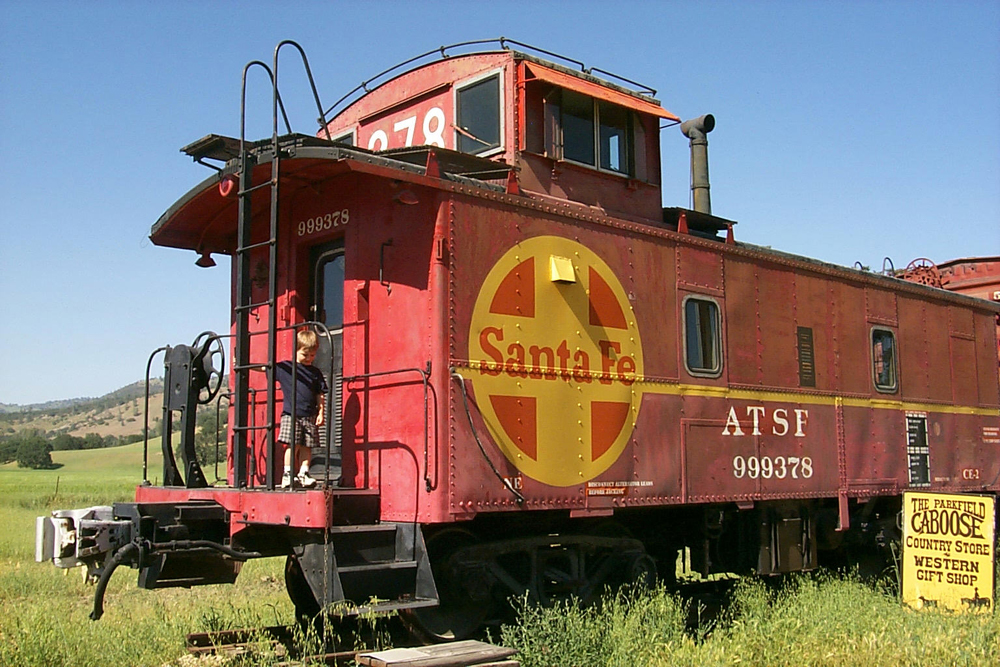
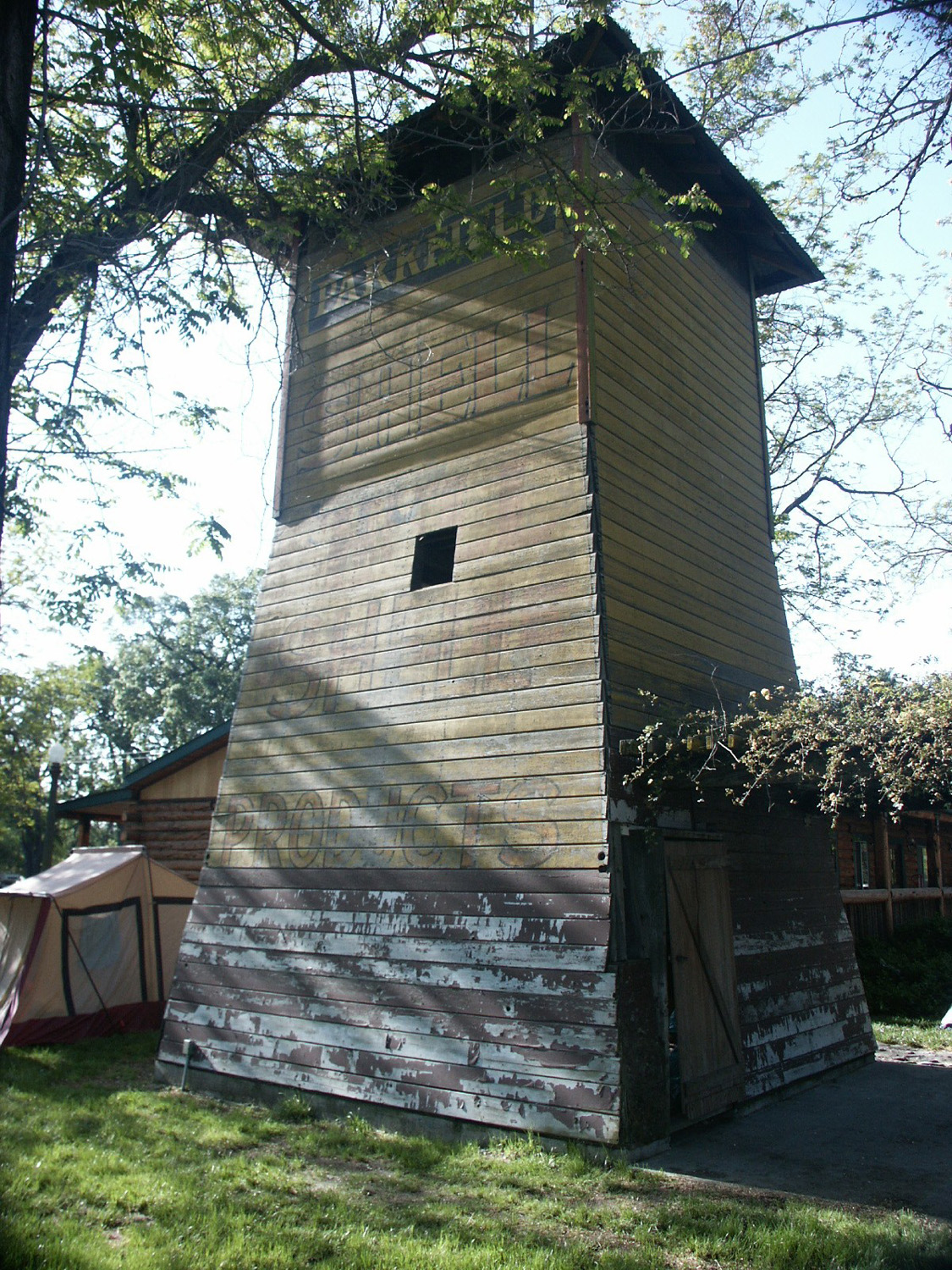
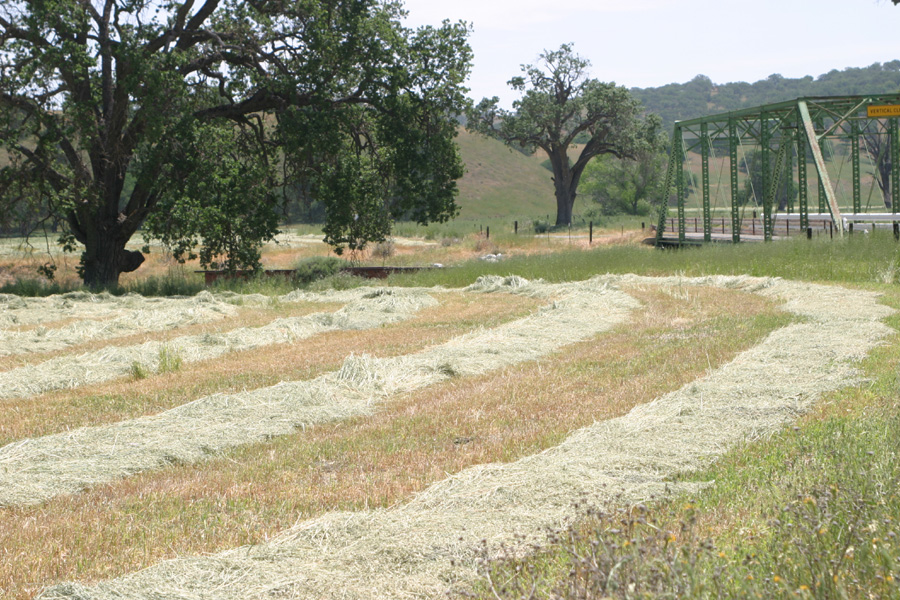
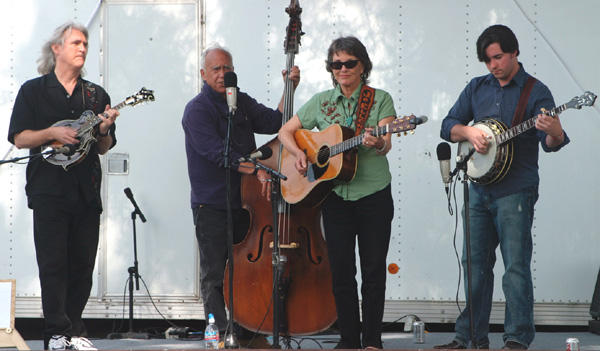
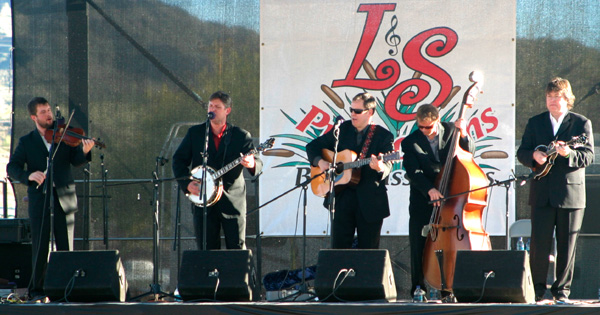
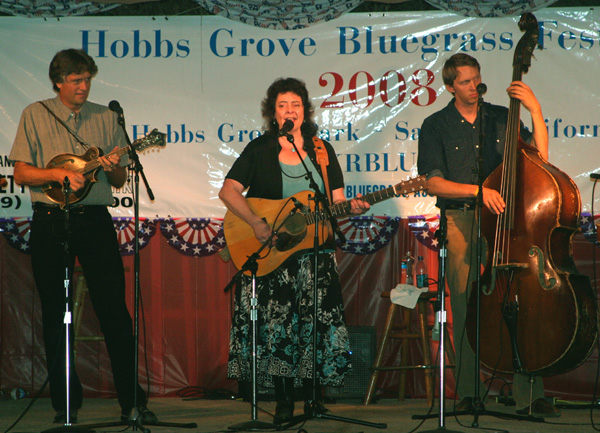
Chapter 15 Chapter 13 Chapter 14 Chapter 16 The 2008 Parkfield festival was the third of five I attended that year. I’m not sure if I’ve conveyed just how small Parkfield is. While the sign gives the population as 18, I’ve also heard that the permanent residents number 37. In any case, there are not more than 15 or 20 residences in and around the town, not all occupied. If I had not been really lazy, it would have taken about five minutes to walk around town and count them. The first European settlers arrived in the area in 1854. In addition to agriculture, there was extensive mining, and in 1900 the population was around 900. When the mines gave out, everyone moved away except the ranchers. The business district consists of the Parkfield Inn and the Parkfield Café. There used to be a gift shop in an old railroad caboose, but the gift shop closed before the festivals started, and the caboose had disappeared by 2008. In later years the old wooden water tower (advertising Shell products) was converted to a rental unit. There is also an elementary school, a California Department of Forestry and Fire Protection (CalFire) station, and the normally quiet building that houses earthquake measuring equipment. Of course, there are a number of farms and ranches out in the country along the various roads. In addition to the annual bluegrass festivals and rodeos, both in May, you can rent the facilities for weddings, biker rallies, and other events, arrange a guided wild pig hunt, or join a cattle drive. The town is in a flat section of the valley, which varies in width from maybe 100 feet to a mile. The fields and hills are covered with large, ancient valley oak trees, and the principle agricultural activities are cattle and hay. At the time of the festival, the hay in some fields had usually been cut and would be drying on the ground, awaiting the bailer. Following my standard pattern, I arrived on Wednesday, and went on my usual exploration tour Thursday morning, driving back down the Cholame Valley Road a short distance to the Parkfield Cemetery. There was no one there that I knew, but dates on the tombstones indicate it has been in use since the early 1900s. This was a year for some unusual wildlife sightings. There are plenty of animals in these hills, but they stay out of sight most of the time. Driving in I saw two pronghorn antelope. Then while biking just outside of town I saw a large bird in some of the uncut hay. The wings seemed to be staying remarkably still, and I soon realized that my “bird” was actually the ears of a mule deer, apparently lying down in the field. But that’s all atmosphere, and we’re really here for the bluegrass. This year we enjoyed two top level nationally-known bands, Junior Sisk and Ramblers Choice, and the James King Band. Eric Uglam had been a Parkfield mainstay from the earliest festivals, and was now performing with his stepsons, Chris and Austin Ward. Another excellent California group was the Del Williams Band. Del’s father, Vern, was a pioneer of California bluegrass, performing with Ray Park. Del was part of his dad’s group from an early age, and had a stellar group of musicians. Also worthy of note were the Brombies, Jo Ellen and George Doering, with two bandmates who seem to appear everywhere and with many other groups, Patrick Sauber on banjo, and Bill Bryson on bass. Bean Creek was a regular at events around Santa Cruz and the Bay Area, and appeared at a number of festivals that I attended. Another Parkfield regular was LeRoy Mack & the Bluegrass Gospel Band. If you were a faithful follower of the Andy Griffith Show, you saw this gentleman (real name Leroy MacNees) when he was 20 years old, appearing in two episodes along with the White Brothers. In those days they were known as the Country Boys, and later as the Kentucky Colonels. The rest of the groups were good or better but I’ve gone on too long, and I still want to cover the 2008 Plymouth festival in this chapter. At this point in time I no longer went to bluegrass festivals just “because they are there,” maybe with the exception of Parkfield. So I would look at the lineup and see if there was someone I just had to see. At Plymouth, there were four groups that attracted me. Number one was Don Rigsby and Midnight Call. Don had been in a number of other groups, including Longview, a so-called super group that drew its members from other active bands, including James King. I had heard a little of Don’s work on Longview CDs and XM Radio, but had never seen him. At this year’s Parkfield festival I talked with a couple who spoke glowingly of New Found Road, a relatively new group that I had not seen, and had heard very little of. They appeared Friday night, and exceeded the advance notice, with an outstanding lead singer. The other two groups were ones I had seen, The Gibson Brothers and Michael Cleveland. The Gibson’s are from upstate New York– extreme upstate, within a few miles of Canada. They started performing as kids, but had only begun getting major notice in the last few years. I saw them at Parker, but from a long distance in a crowded and noisy setting. Here I had two opportunities for a much better experience. All festivals have workshops conducted by some of the musicians, but I almost never attend since I am not going to learn the mandolin nor get better on the guitar. However, the brothers were doing a vocal workshop, and while I don’t think I will become a better singer unless I find a way to make time go backwards, I thought it could be interesting. It turned out to be a very intimate setting with a dozen or so fans sitting six feet from Eric and Leigh and essentially chatting about music. They sang about four songs, and it was great to hear them harmonize with just their guitars, no amplification and no other instruments. Their stage show later in the evening was also everything I expected. Michael Cleveland played fiddle with Rhonda Vincent and a couple of other groups before forming his own band, Flamekeeper, which I had seen in Bakersfield two or three years earlier. Michael was then the five-time IBMA fiddle player of the year, and nominated for a sixth award. His band was also top quality, with two excellent lead singers. Among other groups, Sawmill Road stood out. They were a new group of long-time players that appeared at Plymouth the previous year, as well as at Parker in March. They did a fine job, leaning a bit to the folky side. Members included banjo player Dick Brown, who was with Lost Highway, and Steve Spurgin, who is well-known in the folk world. The Bluegrass Brothers had been at many festivals I attended, and while they are a professional group, they are more enthusiastic than polished. This is not to say that they don’t put on an excellent show, which they do. The Kids on Bluegrass presentation Sunday morning was the usual mixed bag. The newer performers all did OK, but the three kids, age 12 to 14, who had been at Plymouth each year and who were playing together throughout the year were only a couple of years or so away from being an emerging artist band. They did a very strong song that they had written, and another unfamiliar but very challenging number, making it the best Kids on Bluegrass I’d seen. The weekend after Plymouth, the annual Hobbs Grove Bluegrass Festival was held near Sanger, CA, a little over 20 miles from my house. I made this a one-day event. The big draw for me was the Kathy Kallick Band. She was a pioneer on the California bluegrass scene, and a founder of The Good Old Persons, along with Laurie Lewis. I had seen her at the Mariposa festival in the late 1990s, but not since. A special treat was the sensational Dobro player Sally Van Meter, who played in Kathy's band in the past. Even though I was at this festival for only one day, it ranked up there with the others in musical quality and variety. |
|
|
|
| The Brombies | The Gibson Brothers |
|
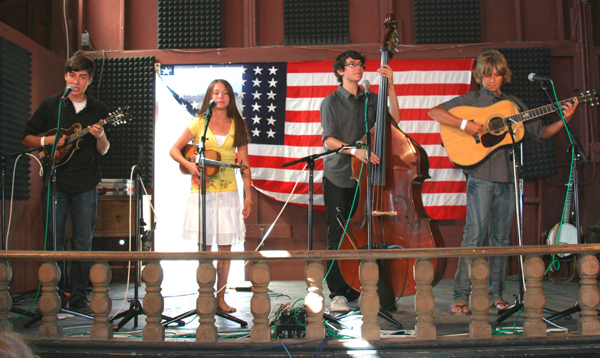
Chapter 16 Chapter 13 Chapter 14 Chapter 15 You may be wondering at my ability to recall details of events that took place up to 25 years ago. I confess: After I retired in 2002, I began documenting every trip, hike, camping trip and musical event that I attended. This information is all on my computer (and on line). I still claim SOME credit for a good memory. These reports did not focus on the artists and music at bluegrass festivals, because my audience was different, and not as interested in the music as you and I. But the basic information is there to trigger detailed memories. I also saved the programs for nearly every bluegrass festival, giving me another good research tool. However, when I started this project for the Fresno Folklore Flyer, I had completely forgotten about a brief series of one-day festivals in Clovis, including 2009. I do not have programs nor formal reports for most of these events, which were limited to maybe three or four years. But I have the program for the January17, 2009 festival, held at the Clovis Veteran’s Memorial Building (right next to the park that hosts bluegrass on summer evenings). It started at 3 p.m. and ended at 9:30 or so. For an extra $15 you could enjoy a buffet dinner of tri-tip or grilled chicken. This dinner overlapped part of the evening program, but you would not have missed out, since the three groups each performed sets in the afternoon and again in the evening. The names will be familiar – Grass Less Traveled, Dalton Mountain Gang, and the Grasskickers. The Dalton gang has been rounded up by the vigilantes, although at least three of their members were scheduled to appear at the 2026 Bluegrass in the Park with other groups. The other two groups still have a web presence, but at least one of the websites does not seem to have been updated for several years. A couple of other local favorites appeared in other years – Baloney Creek and Uncle Ephus. Both were on the 2026 Bluegrass in the Park schedule, although the former has evolved into Tall Can Koozi, fronted by the delightful Dee Richter Johnson. As usual, I went to the Parkfield festival, held over Mother’s Day weekend. Earlier in the year I had traded in my travel trailer for a motor home, with a number of nice features. With the truck and trailer, I had to find room for a TV, DVD player and generator, all of which are built into the new unit. One really big improvement was a good size bunk bed over the cab, in addition to a queen-size bed in back. To have a second bed in the trailer we had to convert the table to a bed, meaning everything had to be moved somewhere else. And the inside of the motor home was made roomier by a 24-inch slide-out which ran the width of the refrigerator and table. This year at the festival there were several top-level groups, not all nationally known, but all deserving of admiration. But before the music began, I saw an “only in Parkfield” sight – a teenage boy riding by on a horse, totally focused on the cell phone in his hand. The standout group the first day was John Reischman and the Jaybirds, who I had seen in Bakersfield a few years earlier. Although most members of the group were living in Canada, only one is a native; the others are California refugees. They have a national following and had a number CDs out, one of which I owned even before I saw the group. Friday night brought a performance by Whiskey Chimp from Ventura, a rare seven-person bluegrass band that proved you can combine Cajun, Mariachi and Rockabilly with traditional music. In addition to the usual bluegrass instruments, they used some accordion and ukulele. Some of their music was hilarious, and overall, their three appearances were a highlight of the festival. In another first, they made and served free grilled cheese sandwiches during their Saturday appearance, just before the dinner break. My favorite group of the entire weekend was Chris Stewart & Backcountry. I’d seen him a number of times, but it had been at least three years, and he had a slightly different lineup. In my opinion, Chris Stuart is the best songwriter alive today, and I don’t hesitate to buy each of his CDs as they come out. The only member of the band who had been with him every time is Janet Beazley, an excellent singer, banjo player and songwriter, who had a good solo album of her own available. New to the group since I last saw them was Eric Uglam, a veteran of many bluegrass groups, most notably Lost Highway. Rounding out the group were Eric’s stepsons, Christian (fiddle) and Austin (bass) Ward, who I’ve written about when they have appeared with Eric as a trio. I think Christian was 12 when I first saw him with Kids on Stage at Paso Robles, a shy, nervous kid. I first met Austin a year earlier when he was a 12-year old, catching lizards in the rocks back of the Parkfield Café. Now they are both accomplished professionals who have played with some of the big names in bluegrass, and have traveled overseas with a teen bluegrass super group. Several old favorites filled out the schedule, including the always delightful Kathy Kallick, Bean Creek, Sawmill Road, and central coast band Better Late Than Never, who made their mark with excellent song selection. During the festival I had one of those rare, once in a blue moon experiences – I won a lottery prize! It turned out to be a gift that kept on giving, tickets to a bluegrass festival near Gilroy, and that’s the next subject for this report. Until I won tickets, I had never heard of the Brown Barn Festival. The festival had been started three years earlier by the late Jake Quesenberry, one of the founders of the California Bluegrass Association. It was located in San Martin, just west of US 101 about half way between Gilroy and Morgan Hill. The annual Bluegrassin' in the Foothills at Plymouth was the following weekend, so I decided there was no point in going home in between - instead I would become one of those "drifters" you hear about, and drift north and east from San Martin to Plymouth in the four days between festivals. At Brown Barn there were two groups, new to me, that became permanent favorites. When I checked in the lady at the desk told me to be sure to see OMGG, a group of young kids that were very good. The name is an acronym for Obviously Minor Guys and a Girl, and it turned out that I had seen the three boys in the Kids on Bluegrass presentation at Plymouth, and the girl at the Mid-State Festival in Paso Robles. They had been playing together for a couple of years, and the girl was amazing - a 19 year old voice in an 11 year old body. And the "old man" of the group, age 15, was a much better than average singer for his age. They had been invited to the International Bluegrass Music Association convention in Nashville the following month, and went on to amaze audiences throughout California until “old age” sent them in different directions. The other was Snap Jackson & the Knock on Wood Players, who went over big, even though some of their music was definitely not bluegrass – a bit of gypsy music, with ukulele and harmonica to add spice. Snap was from Stockton and got his nickname as a free-lance newspaper photographer. He was named northern California banjo player of the year in 2018. The group included Shane Kelbach, who played fiddle and mandolin. Holder of a BA in music, he also played with a symphony and opera company, and taught music in Stockton schools. Brian Clark played bass like no other bluegrass performer (partly because his instrument had five strings), and also performed in classical and jazz settings. Rounding out the group (but not yet with them at Brown Barn) is Eric Antrim, a first rate guitarist who lives in Fresno. I would see the group many times and enjoyed chatting with Snap at shows in Parkfield, Dunlap and elsewhere. There were seventeen groups on the schedule, only five of which I had even heard of. They included a young woman from the central valley, Angelica Grim, who got her start as one of the first Kids on Bluegrass in California. The Notorious Shank Brothers had been around a long time, and gave us a powerful program of traditional bluegrass. And Eddie DuCommun & Bluegrass for the Record mixed the sounds of grass with the classic country songs they grew up with (Marty Robbins, Stonewall Jackson). The guitar duo (with occasional mandolin) of Dix Bruce and Jim Nunally proved you don't need a fiddle and a banjo to entertain a bluegrass audience, just good pickin' and good harmonies. Other groups were equally good, maybe with less of an individual style to stick in the memory, but at the end I said that I would attend this festival again if they presented the exact same lineup, and I guarantee I can't say that about every show I attend. Well, it’s time to fire up the motor home and start that drifting I mentioned earlier – but that’s a story for the next chapter. |
|
|
|
| Kathy Kallick Band | OMGG |