|
Dick's Bluegrass
Odyssey Volume 3 |
|
| Related Links | |
| Chapters 1 - 4 Chapters 5 - 8 Chapters 9 - 12 Chapters 13 - 16 | |
|
The first five chapters of this series originally appeared in the Fresno Folklore Society Flyer. It was decided to discontinue publishing them and make them available only on line. It should be noted that information about most of these festivals has been included in my travel reports. But those pages were written for a general audience, while this series is aimed specifically at fans of folk music. --Dick Estel, September 2026 |
|
|
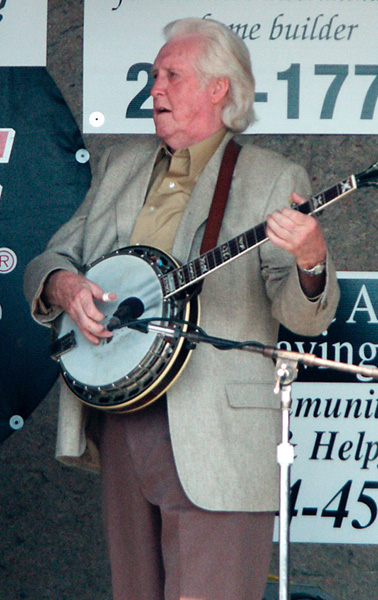
My Bluegrass Odyssey Chapter 9 Chapter 10 Chapter 11 Chapter 12 by Dick Estel Another year, another five bluegrass festivals. If you’re asking, “How many bluegrass festivals do we have to read about?” fear not. As years went by, I attended fewer events each year. In the final four years it was just one each year. 2005 was somewhat a repeat of the previous year, starting off with my second time at the Colorado Bluegrass Festival in Bullhead City AZ. The show on Friday got off to a late start, due to rain that started around midnight, and continued to fall off and on throughout the day. The event was moved across the river to an auditorium in the Ramada Inn in Laughlin NV. There were lots of slot machines to tempt us on the way in, but it was bad for the festival vendors, who could not pack up their booths and move over the river. The first day’s groups were the “lesser lights” of the schedule, but still quite good. However, the sound in the auditorium was not as good as the usual outdoor setup,. The camping area was dirt, so there was mud everywhere, although the ground was hard-packed and driving in and out was not a problem. Parking lot picking was pretty much out of the question, although some people got together and rented rooms at the Ramada. I contented myself with reading and TV. Artists that first day included the Colorado River Boys, a good traditional band, and the Bluegrass Redliners, headed by the always interesting and very opinionated Chris Rudd. I would see them another time at Parkfield. The rain continued off and on into the night, but in the morning it was only partly cloudy, and the festival started on time at the right place. All the groups on day two were great – some I had seen, and some I had not, but all were bands I had heard of. The best was Mountain Heart, who we saw at Mariposa in 2000, when they had been together about a year. They were all veterans of other great bands, and were now truly sensational. Another group that was at Mariposa a few years earlier was Continental Divide. The lead singer, David Parmley, was part of a very popular California group back in the 1980s and 90s, the Bluegrass Cardinals. (A re-formed Bluegrass Cardinals played at the 2026 Father’s Day festival.) A bit over a year earlier I had read an article in Bluegrass Unlimited magazine about Lost and Found, a group that had been around for 20 years, although I had not heard of them. I had enjoyed seeing them the previous year at the Superstition Mountain festival and was glad to find them on the schedule at Bullhead City. They exceeded expectations. The biggest attraction for me, causing me to brave wind, cold and rain, was banjo player J.D. Crowe and the New South. After performing with well-known groups back in the 1960s and 70s, Crowe formed his own group, which soon became legendary as an incubator of top bluegrass talent, including Tony Rice, Keith Whitley, and Doyle Lawson. I enjoyed chatting briefly with J.D. Of course a major high point when you could see them was the Cherryholmes Family. My daughter Teri and I saw them at Parkfield in 2001, when they had been performing in public for about a year. In their own words they were still “rough around the edges,” but they had gotten better each time I’d seen them. They were a family band – dad, mom and four kids now aged 12 to 20. They started out picking in the parking lots around southern California, but were pleasing audiences on stage in short order. In 2002 they headed east to try their hand at making a living playing bluegrass – always a long shot. Soon they had performed on the Grand Ole Opry, appeared with major artists like Rhonda Vincent and Jimmy Martin, and won a number of awards. Twelve-year old Molly performed a song she wrote on a Rhonda Vincent album. They left behind their “day job” and for a while made their living only from performing. The festival concluded with the Cherryholmes Family joined on stage by members of three other groups that had performed the final afternoon, so we had the pleasure of hearing five fiddles together at once, plus various other combinations, vocal and instrumental. The time in this location was always confusing for groups from the east – they were attuned to Central or Eastern time, they stayed at the Ramada Inn in Laughlin where it’s Pacific time, and performed in Arizona, which is on Mountain time. Two groups were late due to the confusion, but others played longer or switched places, so no harm done. I left Bullhead City on February 14, and between then and March 2, I made my first visit to Joshua Tree National Park and visited relatives in Lake Elsinore and Aliso Viejo CA and my parents in Mesa AZ. Staying in Arizona, my final stop was the 3rd Annual Bluegrass on the River at La Paz County Park on the Colorado River near Parker. When I came to this festival two years earlier, I was able to camp much closer to the stage area. It looked like the attendance might be double that of the first year. Day one of the festival brought the usual ups and downs – a group (best left nameless) that I saw three years ago seemed to have gone backward instead of getting better; a famous group whose CDs I had, but had not seen in person (IIIrd Time Out); a very upbeat family band who were reaching the pro level (Lampkins Family), and a completely unknown but excellent band from Tennessee (Blue Moon Rising). The weather was also up and down – a few clouds in the morning, with temperatures warming up, then lots of clouds in the afternoon with intermittent showers and cooling off quite a bit by the end of the show. My poncho proved adequate to keep me dry with the light rain we had. On Saturday the weather was again a mixed bag. Up till about 3:30 it looked like there would be no problems, then a strong wind came up, and dark clouds headed our way. Many people tried to brave the storm, but it was clearly going to be a harder rain than the day before, and the promoter cut short the final performance, by an hour or so. It continued to rain for about an hour, but stopped by 7 p.m.. The music that day was all good – mostly groups I have heard before, and one that was new to me, the Wilders, a band from Kansas City that performed old-time music and country honky tonk. Also fun was Doodoo Wah, a couple of guys from northern California who performed mostly original humorous material, including clever radio commercials that they had created for businesses in their area. On Sunday the music was great. Due to the rain the day before, the U.S. Navy Band had played only three songs, so they extended the program by an hour that last day and they played two sets, one in the morning, and one in the afternoon. The other groups that I saw were all good. I missed James King Saturday, but saw his entire performance Sunday. And here’s a salute to the Bluegrass Patriots, a fun and lively band out of Colorado. It was time to head for home, after a full month of bluegrass, sight-seeing and visiting relatives. It was also time to take care of several repairs to the trailer, so that it would be ready for Parkfield in May. |
|
 |
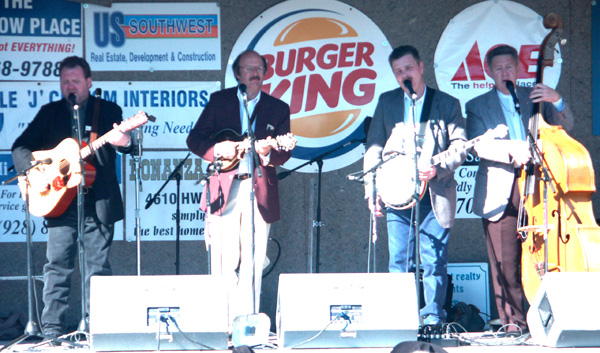 |
| J.D. Crowe | Lost and Found |
|
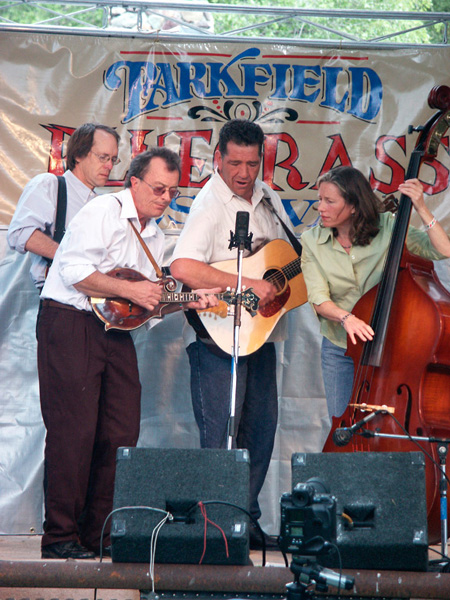
Chapter 10 Chapter 9 Chapter 11 Chapter 12 After two festivals in far-off Arizona, it was good to return to Parkfield, almost next door (well, just over the hill 100 miles). Before we go any farther, a few words about the streets of Parkfield. It won’t take long – there are only four named roads. Most people enter the town from the south on Parkfield-Coalinga Road, also known as 1st Street. The first cross street is Oak Street, where turning right takes you to the rodeo grounds and boondocks camping area. This street goes well past that location, to parts unknown to me. From 1st Street a left turn takes you into the festival grounds. A bit farther on is Park Street. Going right it curves around and becomes 2nd Street, and that takes you back to Oak. To the left Park is basically a private road. There are other drive-ways and tracks, but that’s pretty much it. Only the Parkfield-Coalinga Road is paved. And it’s paved only about four miles, then turns to dirt, or impassable mud in wet weather. There are maybe five houses in town, the café, the lodge, an elementary school, a CalFire station, the USGS Earthquake Monitoring Site, and the community center. The population of 18 swells to a couple of thousand for the bluegrass festival and the rodeo. Otherwise, it’s a pretty quiet place. At this point the event had a new the promoter, Joe Q, who had a long background as a musician and promoter. He was a great guy, but seemed to be very disorganized. People he asked for help in setting things up found themselves waiting around while he ran various errands. He finally told us to go about our business, and he would let us know when he was ready to finish the work. Luckily, when I checked back later, most of the work had been done. The rest of the weekend was one of those good “news/bad news” things. We had rain and thunder at times and the show started late every day. As I wrote at the time, “only” two hours late on Friday, an hour on Saturday, and “almost on time” on Sunday. My friend Janell, who I had worked with at the county social services department, joined me on Friday and despite everything, we saw some of the top groups in bluegrass, and she had a good time. Artists included the Witcher Brothers, James King and the Fox Family who were all terrific. The lesser groups were also worth seeing. My favorite group name was REO Haywagon. Unfortunately, neither my notes nor my memory provides any information about their music, but I would guess it was old-time. Bean Creek was a popular band out of the Bay Area. Long-time member Pete Hicks died in 2022, but the band has soldiered on with most of the other original members, always putting on an entertaining show. Groundspeed, headed by Sam and Mildred Criswell, was a traditional group based in the San Joaquin Valley. A little research shows that they stopped performing after 2011. I could write another page or two about the weather and my explorations of the area, but it’s time to move on to the Huck Finn Festival, my second time attending this southern California event. The opening day show (Friday, June 17) was mostly very good. Cherryholmes and IIIrd Tyme Out were the best, but I had seen them both recently. New to me was the Nashville Bluegrass Band, which was also outstanding. This group includes several players who have gained fame and acclaim on their own or in other groups over the years. I thought that I had never even heard them on record, at least knowingly, but it turned out I had stuff by them on videotape from years earlier. One of the features of the Huck Finn festival is one round of the National Bluegrass Playoffs. Four bands, who have already been through various levels of competition, compete for an all-expense paid trip to the International Bluegrass Music of America (IBMA) convention in Nashville, and the opportunity to present a showcase in front of record company representatives and other music industry people. The winners two years ago were the Lampkins Family, one of my favorites, whom I’ve seen a half dozen times. As usual, the groups in 2005 ranged from OK to quite good. It turned out that the last group, The Brothers Barton & Overdrive, included the two young ladies from the Lampkins Family, and a 13-year old fiddle player, Chris Ward, whose stepfather is Eric Uglam, then a member of Lost Highway. This group was my choice, and in fact was the winner. The closing act Sunday night was Merle Haggard. Since he was getting on in years, my expectations were low, but he put on a great show. He did a lot of his hits, and despite the electrification that bluegrass does not have, it was not too loud at my 10th row center seat. He sounded as good as ever, but clearly knew his limitations, and held his show to 40 minutes with no encore. This festival always has an act like that to close the show. I suspect they do it to bring in a bunch of non-bluegrass fans and get their $20 to help support the real reason for the festival. The group that was my main interest, Dry Branch Fire Squad, did not disappoint. They did four sets, and were everything I expected from hearing their CDs that I have. The singer, Ron Thomason, has a very different vocal sound (although it’s still a southern sound) that makes me think of music from ancient times. He is also an accomplished story-teller, and intersperses his wry, dry anecdotes throughout the show. Most festivals have a few things besides the music, and Huck Finn had a lot. A partial list included hot air balloon rides, a fishing derby, a circus, horseshoe pitching, line dance workshop, raft building contest, and a Huck Finn look alike competition (I chose not to enter). A special bonus this year was a herd of about five camels in the field next to the festival grounds. I said goodbye to the camelids and Victorville and made the six-hour drive back home, with 2005’s final festival about three months away. This was a one-day visit to the Kings River Bluegrass Festival on September 25. I’ve had issues with this event in the past, but this time it was quite good – nearly all bluegrass. They had eliminated the purely country groups and the beer booth, which seems to have also eliminated the rowdy fans who like country but not bluegrass. Grandson Mikie went with me, and Janell came in the afternoon for her second bluegrass festival. Mikie played with several kids, one of whom, about age 10, played guitar with one of the groups. He did an excellent job, playing in the old-time style of Gid Tanner and similar artists. Although I left my chairs behind, they were rescued by the promoter and I was able to retrieve both of them within a couple of weeks. It would not be my last mishap at a bluegrass festival – but that’s a story for another day. |
|
|
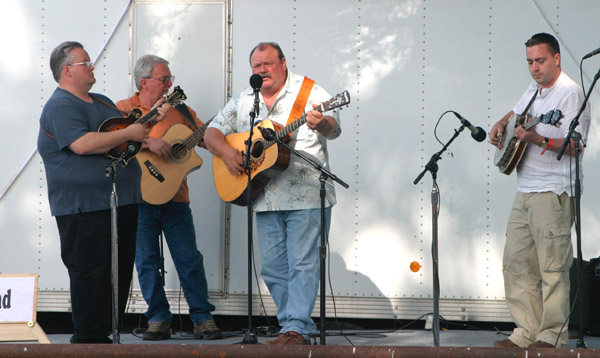 |
| Bean Creek | James King Band |
|
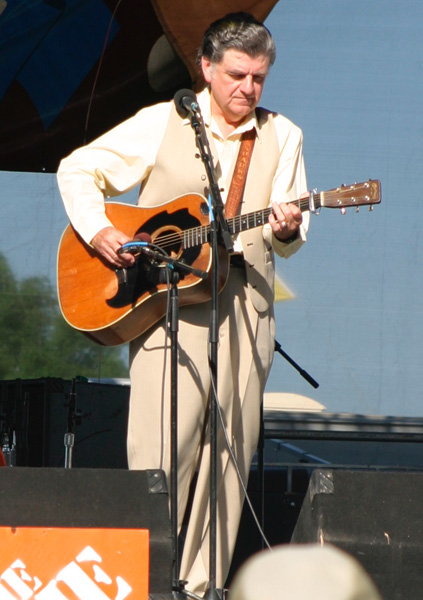
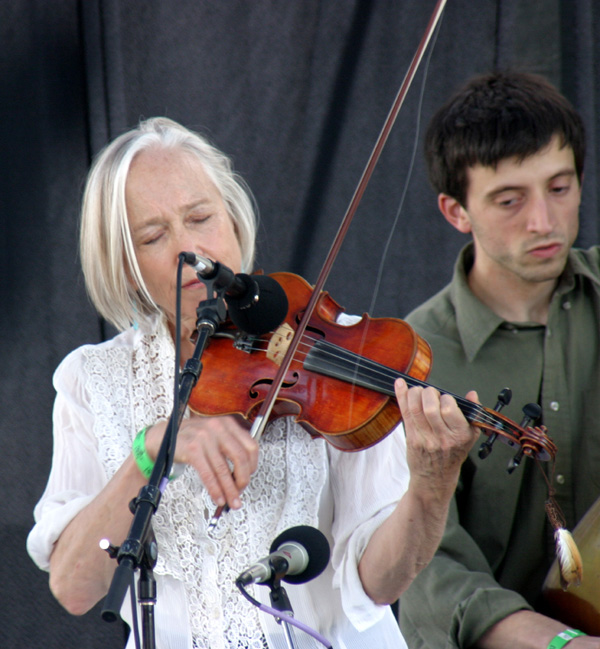
Chapter 11 Chapter 9 Chapter 10 Chapter 12 The year 2006 would find me attending four festivals. In February my daughter Teri, Janell, and I attended an indoor festival at Bakersfield. It was the first SuperGrass festival, presented by the California Bluegrass Association, and was the first indoor festival I had attended. Free camping was provided at the fairgrounds, about a mile and a half away, but most people stayed in hotels. There were only 20 or so RVs at the fairgrounds. Teri & Janell stayed at the hotel, but I “roughed it” in my trailer. The sound was shaky at first, but it soon got fixed, and the music was excellent through the rest of the event. Big name groups included Doyle Lawson & Quicksilver, Nashville Bluegrass Band, Cherryholmes, Blue Highway, Lost & Found, and Marty Rabon. Marty was the lead singer with the country group Shenandoah before he decided to return to his roots, and his group was the only one I had not seen before. Having my “home away from home” so far from the action was a little inconvenient, but on the other hand, an indoor festival avoids any possible problems with rain, cold or fog. The location was the Bakersfield Civic Auditorium, which holds 3,000, but probably had only a thousand at the most at any one time. The season continued with the 8th Annual Parkfield Festival on Mother’s Day weekend. For the first time since the new promoter took over, the show started on time. Thursday’s acts were mostly lesser known (and sometimes lesser-skilled) regional groups, but a couple stood out. I had seen Stay Tuned at last year’s event, but did not recall how good they were. I had also seen the Bluegrass Redliners, inside at the Colorado River Festival in 2004, because it was pouring rain outside at the time. In fact, I had a CD by the group before I ever saw them, purchased on the basis of an article in the Bluegrass Soundboard newsletter, and I had been quite happy with it. Also very enjoyable were The New Five Cents, who played what they call old-time and good-time music. This includes Irish jigs and reels. What we now call “old-time” music is simply pre-bluegrass country, usually called hillbilly or mountain music back in its contemporary period of the 30s and 40s. Friday was mostly a repeat of the same bands as the day before, with several others being added for the evening show. All but one were regional bands, but Chris Stuart and Backcountry is certainly of the highest caliber, and have had songs and albums on the national Bluegrass Unlimited magazine charts. The only national group that day was Special Consensus, which started in Chicago over 30 years earlier. Although there have been a number of personnel changes over the years, founder Greg Cahill remained the anchor of this group that I first saw on TV on the Nashville Network back in the 1980s, and still is as they complete 40 years. Friday night brought two extra special groups. Chris Stuart is a San Diego resident who is an excellent song writer and singer, and had been performing with his group Back Country for two or three years. The group for this event included singer-guitarist-mandolin player Eric Uglam, who had been with the internationally acclaimed group Lost Highway for close to ten years. Back Country also included Eric’s two stepsons, Austin (15) and Christian (14) Ward on bass and fiddle respectively. I had seen them several times over the previous two years and they had developed into good musicians, playing with several groups at festivals. I don’t know anything about Austin, but Chris went on to play with Sierra Hull and Del McCoury. Handling many of the lead vocals with Special Consensus was Ron Spears, who toured for six or seven years with his own group Within Tradition. Two other former members of Within Tradition, fiddler Mike Tatar and bassist Joe Ash were then part of Lost Highway, which was also on the bill at Parkfield. Former members Charlie Edsel, a master guitarist and singer, and banjo player Hal Horn also came over, allowing for a Within Tradition reunion. After two years apart, and with only 20 minutes rehearsal, they sounded as good as ever, although they had to stop and discuss which key a song was in once in a while. The weekend concluded with a 60th birthday celebration for promoter Joe Quealy, observed with singing and a big cake and homemade ice cream, which was shared with the remaining audience members. At that point in my life, I had always wanted to go the Huck Finn festival, because it was one of the two biggest in California, and offered the biggest collection of big names of any festival. There was usually one group I’ve never seen or really wanted to see again that could convince me to go, and 2006 was no exception. Larry Sparks was one of those bluegrass legends – he had recently celebrated his 40th year of performing, having started with the Stanley Brothers in 1965. One of his big songs is “Tennessee 1949,” which is a favorite of mine. It was written by Pete Goble and Leroy Drumm, who it seems wrote just about half the great bluegrass songs in existence. In 2004 in Arizona I had seen the Lonesome River Band at the Superstition Mountain festival, and had been wanting to see them again ever since. The leader is banjo star Sammy Shelor. A few years ago by mutual consent, everyone except Sammy left the band, and he put together a new lineup. I had CDs by both configurations, and liked the current group best. I told Sammy that I suspected he kept the group going just so he could play the banjo every weekend. He did not deny it. There were three other groups that I’d seen and especially liked – Laurie Lewis & the Right Hands from the Bay Area, Pine Mountain Railroad, and the U.S. Navy Band, Country Current. I’ve mentioned some of the non-bluegrass activities offered at most festivals. Huck Finn and several others included a car show, featuring classic and vintage vehicles, most in excellent condition. I’m not a “car guy” by any means, but I always enjoyed checking out vehicles that are older than I am. The group that was new to me, although I had read about them, was the Grascals. This is sort of a super-group, in that several of the members, in addition to their bluegrass experience, had toured with one or more of the Osborn Brothers, Larry Cordle, Dolly Parton, Garth Brooks, and Brooks and Dunn. They were a big audience favorite, and I enjoyed both their shows. Each year the closing act is a well-known country performer. I believe I’ve mentioned that this draws a lot of people who would not come for the bluegrass, so helps to pay for the bluegrass acts. I can take it or leave it, but every Sunday night performer has been great. Pam Tillis started things off, singing a bunch of her hits, mostly from the 1990s, and mostly familiar to me. Then her dad, Mel Tillis took over, and did a bunch of his hits and a couple of newer songs. Since these go back to the 1950s, they are also familiar. Finally Pam joined him for several duets. As he mentioned, the last two songs they sang, “Detroit City” and “Ruby, Don’t Take Your Love to Town,” helped pay the bills for Pam and her four sisters and one brother. If you’re not familiar with Mel’s work, he also wrote “Saginaw Michigan,” “I’m Tired,” “I Ain’t Never,” "Diggin' Up Bones," and many other hits. Many of his songs were hits for other performers rather than Mel. An interesting side note is that I had recently seen Mel on the old Porter Wagoner Show from the late 1960s and 70s, when Mel looked younger than Pam is now. In fact, he let us know that he is 73, and he shares my birthday. Well, he didn’t mention the latter fact by name, but he did give the date. Mel passed in 2017. There’s one more 2006 event to cover, but I’ve gone on too long already, so I’ll save that for the next chapter. |
|
|
|
| Larry Sparks | Laurie Lewis |
|
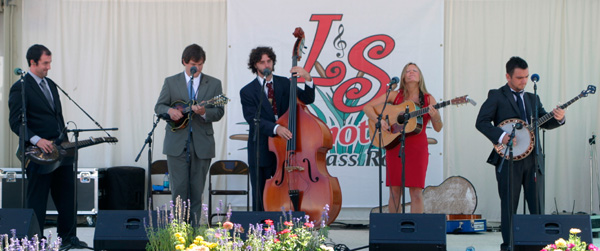
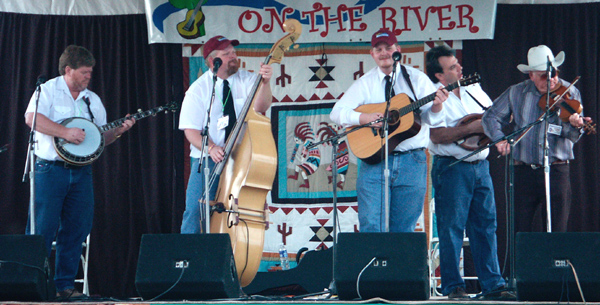
Chapter 12 Chapter 9 Chapter 10 Chapter 11 It’s still 2006 in this time travel series, with Bluegrass in the Foothills concluding the year’s events. The site of the festival, Plymouth on State Route 49, is a tiny town, about a thousand people, one of the smallest incorporated cities in the state. It’s also the site of the Amador County Fairgrounds, which is laid out on a gently hilly section of land, with plenty of electrical hookups, and some very nice landscaping – a pond with a waterfall, wooden bridges, covered archways and of course all the usual buildings needed to have a fair. The first day of the show there were several groups I had seen before, the biggest being Special Consensus and Cherryholmes. I sat next to a gentleman who had not seen the latter group before, and he was blown away at the first song. Those of us who have been watching this group at Parkfield and southern California since their beginning as a very amateur band have a sort of proprietary interest in their amazing success, and it’s always nice to see our opinion validated by someone who has no prior history with the group. The other big name group I had heard but not seen was Dan Paisley and Southern Grass. Dan’s father Bob led the group for many years until his passing in 2004, and they are known as a very hard-driving traditional band – loud, fast and good. Another band member is also a Paisley son, and there are two brothers from another family with a long history in bluegrass (fifth generation in hillbilly music). Finally, the fifth member’s father played in the group, so they have a solid background in the music. All of their fathers performed together. This festival features an “emerging artist” program – four newer and/or lesser-known bands that vie for the chance to move on through further levels of competition. The winner would compete at the Huck Finn festival for a chance to perform at the International Bluegrass Music Association convention next year. This year’s winner was also the crowd favorite, The Mighty Crows from the Bay Area. There were several groups new to me on Saturday, with Bound to Ride probably the one that stood out. It included Phil Cornish, a fixture on the Bay Area bluegrass scene for many years, as well as banjo player Patrick Ickes, whose brother Rob is one of the top dobro players in the world, and a founding member of Blue Highway. The group also included their mother on bass. Hit and Run Bluegrass from Colorado was new to me, but two of the members are old favorites – Ivan Rosenberg, who appeared with various configurations at several Parkfield festivals, and Lorenzo Gangi, who was in most of the groups with Ivan, most recently Iron Lasso. As Ivan put it, Hit & Run is 40% Iron Lasso. The great revelation at this festival was Wildfire, whom I had heard of but not heard. They are a great hard-driving band, with their latest CD and a song or two on the bluegrass charts. I was also greatly impressed by Dan Paisley and Southern Grass. As I mentioned, I have one CD from when his dad was the leader, but it did not prepare me for how good they are in person. Cherryholmes as always put on a crowd-pleasing performance, auditioning several of the new songs that will be on their next CD. I talked briefly with Sandy (the mom) about their beginning days when they felt ready for their first public performance after they had learned five songs. She said they really couldn’t even do those songs anymore, because they were such basic simple arrangements, and they’ve moved far beyond that now. This does not mean they can’t and don’t do some old bluegrass standards; just that they take a much more complex approach to them. It was quite warm Sunday, enough so that I moved into the shade for the last two performances. The final act was plenty hot in its own right - the Chapmans, a group of three brothers and their father who have been very successful the last few years. I saw them in Bullhead City probably in 2004, and they have released two more CDs since then. Now we fast forward to 2007 and my second time at Supergrass, the indoor festival at Bakersfield. I had a very special companion on this trip, my Mother Hazel Estel. From Bakersfield we would go on to Mesa AZ where she would stay with a friend in the RV park where she and my late father used to have a small mobile home. She was no stranger to RV travel, having covered the country with Dad in a motor home for 20 years or so, and enjoyed her first time hearing live bluegrass. The festival had some great music. The main reason I wanted to come to this event was the appearance of Chris Hillman and Herb Pedersen. These names, especially Hillman, should be familiar to anyone who has followed popular, country rock or bluegrass music in the last 45 years. Hillman was a member of the Byrds, co-founded the Flying Burrito Brothers, and was the front man for the Desert Rose Band, which had a number of country rock hits in the 1980s. Pedersen was in the DRB, as well as various other country and/or acoustic groups, and has served as a studio musician and back up singer with countless artists. In addition, they have played together since the 1960s, and recorded several duet albums in the last ten years or so. They were backed up by bass player Bill Bryson, also a member of DRB and various bluegrass groups. They did a nice selection of country and bluegrass tunes, as well as songs from the various groups they’ve been associated with. They even included a song co-written by Hillman and Steven Stills when they were in the group Manassas. If you recognize that name, you’re really old, but at least you were not too stoned to pay attention. Most of the other groups were excellent. Performers I had seen previously included Special Consensus, Laurie Lewis, the Bluegrass Brothers, and J.D. Crowe. It’s been an especially good period for seeing Laurie Lewis the last few months. She was at one of the first festivals I attended, and I had wanted to see her again, but there was a long dry spell. Then she appeared at the Huck Finn festival last June, in Fresno last fall, and now here in Bakersfield. A new group as far as in-person performance was John Reischman and the Jaybirds, a group based mainly in Canada. They were highly professional and did a good variety of music. Mother did fine, although it was a fairly long day for her. We had a great prime rib dinner at the hotel restaurant. The festival is in the Bakersfield Convention Center, which includes a hotel, auditorium, and sports arena. Saturday was mostly outstanding and included two groups I’d heard of and was looking forward to seeing and hearing. Michael Cleveland and Flame Keeper was the best of the two, and in fact one of the best of the festival. Cleveland is a very hot award-winning fiddler, and the group featured Audie Blaylock, a well known singer and guitarist. Both he and Cleveland had been in Rhonda Vincent’s band . I always try to choose my favorite band at each festival, and I had to award dual honors this time. As expected, Hillman and Pedersen were worth the entire ticket cost. The other top group, one I’d seen before and enjoyed, was the Grascals, a group that had been together only three years, although they had all been playing music for 20 years or so. Many of them have been in top country and bluegrass groups, and as the Grascals, they opened on a tour with Dolly Parton when they first formed. Their second CD, which I played while driving, does a good job of capturing their energy and enthusiasm. After we left Bakersfield, Mother would spend a couple of weeks with a friend and with some cousins in the Phoenix area. I would continue my practice of combining bluegrass and sight-seeing with the Colorado River festival in Bullhead City AZ, a visit to a cousin in the town of Joshua Tree, and hiking with her in the nearby national park. My Bluegrass Odyssey continued with another two festivals in 2007, but that’s a story for the next chapter. |
|
|
|
| Hit and Run (Ivan at left) | Bluegrass Brothers |